


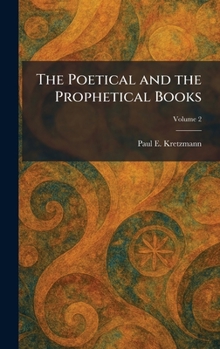
The Poetical and the Prophetical Books

"The Poetical and the Prophetical Books" is a comprehensive and insightful biblical commentary designed to bridge the gap between scholarly exegesis and the needs of the everyday reader. Focusing on the second half of the Old Testament, this volume provides a detailed analysis of the wisdom literature and the messages of the prophets, spanning from the profound existential questions of Job to the messianic visions of the Minor Prophets.
Authored by the esteemed theologian Paul E. Kretzmann, the work offers a clear and confessional approach to Scripture. Each section provides historical context, linguistic clarifications, and practical applications, making it an invaluable resource for students, pastors, and laypeople alike. The commentary delves into the rhythmic beauty and spiritual depth of the Psalms, the practical wisdom of Proverbs, and the urgent calls to repentance found in the prophetic writings, always emphasizing the continuity of the divine narrative.
This volume serves as a significant contribution to Christian literature, valued for its unwavering commitment to the biblical text and its accessible, instructional style. Readers will find a wealth of information that brings the ancient texts of the Old Testament to life with theological depth and historical relevance.
This work has been selected by scholars as being culturally important, and is part of the knowledge base of civilization as we know it. This work was reproduced from the original artifact, and remains as true to the original work as possible. Therefore, you may see the original copyright references, library stamps (as most of these works have been housed in our most important libraries around the world), and other notations in the work.
This work is in the public domain in the United States of America, and possibly other nations. Within the United States, you may freely copy and distribute this work, as no entity (individual or corporate) has a copyright on the body of the work.
As a reproduction of a historical artifact, this work may contain missing or blurred pages, poor pictures, errant marks, etc. Scholars believe, and we concur, that this work is important enough to be preserved, reproduced, and made generally available to the public. We appreciate your support of the preservation process, and thank you for being an important part of keeping this knowledge alive and relevant.
Customer Reviews
ThriftBooks ® and the ThriftBooks ® logo are registered trademarks of Thrift Books Global, LLC
