Skip to content
ISBN: 0312310919
ISBN13: 9780312310912

The Parrot Trainer

$9.99List Price: $24.95
Save $14.96!
ISBN: 0312310919
ISBN13: 9780312310912
Formats

Conditions

A read copy that remains in clean condition.

Formats

Conditions

A read copy that remains in clean condition.

See all 2 editionsfrom $9.99

Book Overview

An archaeologist from the East, a former art dealer and pot thief, the spirit of the Parrot Trainer trapped in an ancient bowl, a renegade Indian and a French social theorist and the team filming him all clash with each other and provoke the locals during an unexpectedly dangerous trip in New Mexico. Tweaking knee-jerk political correctness and academia, Wolfe sets his novel against a rich archaeological and anthropological background, and deals with some of the fields' most controversial issues. Witty, sexy and rife with local colour, this novel of ideas has magic realism and a tender love story at its core.
Format:
Hardcover
Language:
English
ISBN:
0312310919
ISBN13:
9780312310912
Release Date:
February 2003
Publisher:
St. Martin's Press
Length:
288 Pages
Weight:
1.07 lbs.
Dimensions:
8.6″ × 1.2″ × 5.7″
ContemporaryDocumentariesFantasyFictionLiteraryLiterature & FictionScience Fiction & Fantasy

More by Swain Wolfe

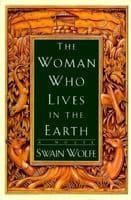
Swain Wolfe Fellow author Rick DeMarinis sums up the appeal of one of today's most compelling -- and enigmantic -- fiction writers: ""Swain Wolfe is a magician -- his hypnotic prose makes the familiar strange, the strange familiar."" Biography Swain Wolfe is a writer and filmmaker who has lived in Montana most of his life. His early films were made in Oakland, San Francisco, Seattle, Albuquerque, Santa Fe, and Montana. An interest in cultural anthropology resulted in the films Energy & Morality , about the effect of high energy use on social behavior, and Phantom Cowboy , about the ways groups and individuals heighten their sense of identity by using aggression to isolate themselves and their causes from the general public. His films have been exhibited at the Museum of Modern Art in New York and have twice represented the United States in the International Public Television Conference. Recent projects have taken him to a Bedouin shantytown on the Gulf of Aqaba and to an island in Alaska to observe and film grizzly bears. The latter film, The Sacred Bear , will explore bear stories from early Eurasian and North American cultures, and compare our present views of nature with those of our early ancestors. One day in a meadow by the sea, he woke from a nap to find himself surrounded by five large grizzlies. He explained, ""The bears were eating Chocolate Lilies. They ignored me. But sometimes, when I'm just waking up, I can still feel bears around me: large, serene, self-possessed bears."" For years, Wolfe lived and worked around natural storytellers. The first were the cowboys he lived with as a boy on ranches in Colorado and Montana. As a young man he worked in the underground copper mines of Butte and Walkerville, and later as a logger in the Bitterroot Mountains. In an interview for The Bloomsbury Review , he explained how these jobs affected the way he sees the world: ""When you're underground for a while, you begin to get the feel of where the ore flows, how hard the granite is one place from another, how hot the wall temperature is from level to level, where the earth slips and messes up the tracks, and things you knew but never had words for. Then one day after work you drive over to Anaconda to see your girl and you realize something is very different. Your world is never going to be the same because you cannot be on the surface without thinking about what's underneath. And like water seeping through sand, that sensation invades everything, all your thoughts, your dreams. You're never the same. The mines let you see in unconventional ways. At the same time, many of the miners knew how to tell stories better and with greater purpose than any I've read. ""After the mines, I worked in the woods. I became intensely aware of trees, which created another world for me and a very different way of seeing. Our early ancestors believed the world was alive and aware of us. I know how that feels and it affects how I write and how I tell stories."" His novel The Woman Who Lives in the Earth , evolved over a period of years. ""The end of the story came from a dream I had as a child. The personalities of the people, even various animals, and, of course, all those experiences that show up in small, unconscious ways -- all these things became a vague sensation that surrounded my dream. Then one day it was a story. It was like seeing a face for the first time in the ancient plaster of your kitchen wall. We can look at something for years, and suddenly see it."" Author biography courtesy of HarperCollins .

Customer Reviews

3 customer ratings | 3 reviews
Write a Review

Great Combination of Humor, Scholarship and Story

Jack Miller meets people in the strangest ways. Take the dead man at the beginning of this finely crafted Southwestern novel. The car he's driving flies off the cliff above Miller as the former pot hunter is digging in a place called Lacuna Canyon. Inside the wrecked Ford Taurus is a German anthropologist dead from a probable heart attack. Among his possessions are drawings of a compelling young woman on a Mimbres Indian pot and a map on how to find it. Driven by the compulsion that some people have for ancient artifacts, Miller follows the map and finds an untouched Mimbres site with the bowl in a bed of parrot feathers. Carrying the find to his truck, Miller is bitten by a scorpion whose poison makes him delirious. That's when he meets the second stranger in the form of a sexy Tinker Belle named Willow-an apparition of the girl on the bowl. Her spirit is trapped inside, she tells Miller. Her request: break the bowl so her spirit can go free. This quest and others Miller undertakes explore his conversion from a mercenary pot hunter to man with a genuine desire to unlock cultural mysteries. In the course of his exploration, he encounters such odd characters as Henri Bashe, a French intellectual who deconstructs everything he observes; a film crew right out of Dukes of Hazzard; an Indian art forger named Kills the Deer; and Lucy Perelli, the sexy head of a preservation fund. She proves to be an enabler for a sleazy Eastern archaeologist. His goal: lay claim to an archaeological find of Miller's that proves prehistoric migrations took place much earlier than those claimed by Native Americans. With this stew of characters, the plot cooks up into a wild comedy. It is a darkly funny send-up, in which cultures and characters that should not even be in the same county with one another are forced to interact. The result is thoughtful, hilarious, frightening and at times philosophical. I have known Wolfe for three years now, meeting him here in the Valley while he was in the midst of writing The Parrot Trainer. We visited the Salado ruins near Globe, where he exhibited an encyclopedic knowledge of the dwellings and artifacts there. But he never revealed the bizarre plot line that he was working on in his book. I'm glad of that, because reading the final product has been a delight. I had never thought of the stodgy world of archaeology as being fodder for such wry stuff. But here we have a diverse cast of characters examining the meaning of culture through lenses warped by their own cultures. These differing and sometimes hilarious points of view make it easy to understand the observation by Bashe that is the central theme of the book: "The waking world is merely illusory. The world of dreams is the true reality." This is one of the few novels I have read that contains a bibliography of scientific references. This provides reassurance that the historical references in this work of fiction are indeed accurate. But I think the fi

0

A GEM !

Usually I write reviews of non-fiction books. But this exceptional novel has caused me to change my review area.Swain Wolfe gets to a thousand year rain (Have I said too much?) by a lovely and interesting story that is part ghost story, adventure story and love story; peopled by slightly loopy characters, who add a gentle level of fun.I have often joked about prefering my knowledge sugar-coated (within the context of a story). There is plenty of this kind of knowledge in THE PARROT TRAINER including archeology and Southwestern American culture, both ancient and modern. Good evidence for the author's honesty with facts is his willingnes to provide a bibliography for the reader to explore the subjects used in the story.GREAT FUN AND A GOOD READ!

0

Marvelous!

if your are a tony hillerman fan you have to read this book.its fun, educational, & exciting.i was very impressed with mr swain's bibliograpyused for this work...i cant wait for his next book

0