


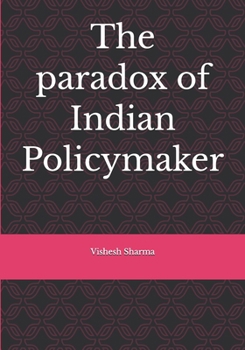
The paradox of Indian Policymaker

The Paradox of Indian Policy Making explores the complex realities of how public policies are conceived, formulated, implemented, and evaluated in one of the world's largest and most diverse democracies. While India has achieved remarkable progress in economic growth, digital transformation, infrastructure, and social welfare, the journey of policymaking is often shaped by competing political priorities, administrative challenges, institutional constraints, and socio-economic diversity.
The book examines the paradoxes that emerge when well-intentioned policies produce unintended consequences, when ambitious reforms face implementation bottlenecks, or when short-term political considerations conflict with long-term national development goals. Drawing upon historical events, contemporary case studies, economic principles, governance frameworks, and public administration theories, it provides readers with a balanced and evidence-based understanding of the policy ecosystem in India.
Designed for students, researchers, civil service aspirants, policymakers, and anyone interested in governance, the book bridges the gap between theoretical concepts and real-world policy decisions. Rather than presenting policies as simply successful or unsuccessful, it encourages readers to critically analyze the trade-offs, institutional dynamics, and stakeholder interests that influence policy outcomes. By fostering analytical thinking and informed debate, The Paradox of Indian Policy Making offers valuable insights into the challenges and opportunities of building effective, inclusive, and sustainable public policies for India's future.
Customer Reviews
ThriftBooks ® and the ThriftBooks ® logo are registered trademarks of Thrift Books Global, LLC
