


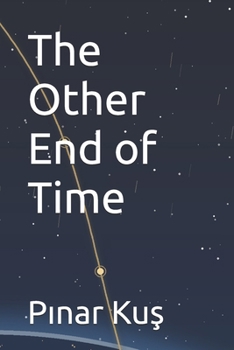
The Other End of Time

Your grandchild may wait a hundred years to save you.
Nehir is forty-three, an ordinary water engineer. She is not married; she has no child - and so, no grandchild. One October morning she gets into her car and is about to turn the key when a voice comes from the back seat:
"I'm so sorry... Grandma."
The young man who abducts her tells an impossible story: the "aliens" seen in the sky for centuries are humans from the future - descendants of a humanity that fled to space after the great catastrophe. What ended the world in 2089 was not a bomb, but a million small surrenders. And the key to preventing it is hidden in a meeting nobody cares about, on a chair left empty.
The person who must sit in that chair - the woman who must stop saying "Who am I to...?" - is Nehir.
The Other End of Time is the story of a grandmother and her never-born grandson trying to save two timelines at once - a novel of water, patience, and refusing to give up. From a vote in Geneva to a wave on the Aegean, from a neighborhood tea to an archive of voices among the stars, it asks science fiction's oldest question in the language of family: Who changes history?
The answer is waiting in the back seat. Turning the key is up to you.
"Who am I to...?" - the most expensive sentence in human history. This novel is the story of proving it wrong.
The Other End of Time is the story of a grandmother and her never-born grandson trying to save two timelines at once - a novel of water, patience, and refusing to give up. From a vote in Geneva to a wave on the Aegean, from a neighborhood tea to an archive of voices among the stars, it asks science fiction's oldest question in the language of family: Who changes history?
The answer is waiting in the back seat. Turning the key is up to you.
"Who am I to...?" - the most expensive sentence in human history. This novel is the story of proving it wrong.
Customer Reviews
ThriftBooks ® and the ThriftBooks ® logo are registered trademarks of Thrift Books Global, LLC
