





Book Overview
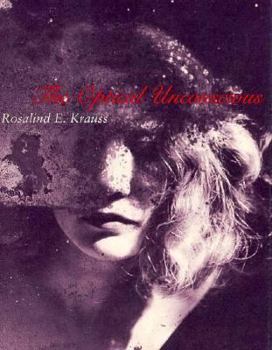
The Optical Unconscious is a pointed protest against the official story of modernism and against the critical tradition that attempted to define modern art according to certain sacred commandments and self-fulfilling truths. The account of modernism presented here challenges the vaunted principle of vision itself. And it is a very different story, not only because its insurgent plot and characters rise from below the calm surface of the known and lawlike field of modernist painting, but because the voice is unlike anything we have heard before. Just as the artists of the optical unconscious assaulted the idea of autonomy and visual mastery, Rosalind Krauss abandons the historian's voice of objective detachment and forges a new style of writing in this book: art history that insinuates diary and art theory, and that has the gait and tone of fiction.
Format:Hardcover
Language:English
ISBN:026211173X
ISBN13:9780262111737
Release Date:January 1993
Publisher:Mit Pr
Length:365 Pages
Weight:2.32 lbs.
Dimensions:9.5" x 1.3" x 7.5"
Customer Reviews
2 ratings
Can you see the watcher?
Published by Thriftbooks.com User , 24 years ago
Kraus's "The Optical Unconcious" is a good companion, as it were, to Martin Jay's "Downcast Eyes." Both discuss the dilema of visuality in Modernist thought and then -whoa - bring out post-modernism just by speaking about the eye and seeing. While Jay gets technical with his notion of "occular centrism," Kraus lets us feel what it means to watch or be watched. Her approach to the male gaze, the fashionable term for good old fashioned voyerism, is that it is natural. Sure, it one can analyse it as a by product of the failure of the industrial revolution to liberate people from work and to bring about more leisure time for the masses (by implication create greater equality - fewer people watching each other in the negative sense). Krauss is right when she insists that looking is a normal, natural occurance in contemporary society. She is also on target about the obsession Americans have with time, and that sight is the quickest method of human understanding. A great book!
unconfortable platform to contemporary culture
Published by Thriftbooks.com User , 26 years ago
Through a carefully structured narrative agenda, Rosalind Krauss is able to foreshadow, a compromised and descriptive text, about the contemporary use of the word "understand", specially if applied to the modernist arts and its criticism. Greatly to the advantage of us, lesser audiences, every thesis is exhibited with both academic rigor and narrative richness, permiting thus, the emergence of rich and useful images, powerful to illustrate, vinculate, even sometimes explain, many of the contemporary works of other theorists, that come to the text sometimes to expose, sometimes to poison, the general arguments around modernist production and the understanding of arts. Great for abbandoning oneself into insomnia, it is common to find provocative images, greatly to the advantage of self-involment in the arguments, and to the further underdstanding of the actual state of simbolical exchange, in the present tense. The involment in contemporary thought and debate, and the well constructed historical narrative, provides the text with an surprisingly effective mirror to look at our culture at an compromisingly close viewpoint, in wich many constitutive arguments of contemporary culture today are reflected just as the many of the historical lies that are still at use now at the "explaining" of the artistic pulsions, and its assimilation by the artistic institutions.
Copyright © 2026 Thriftbooks.com Terms of Use
| Privacy Policy | Do Not
Sell/Share My Personal Information | Cookie Policy | Cookie Preferences | Accessibility Statement
ThriftBooks® and the ThriftBooks® logo are registered trademarks of Thrift Books Global, LLC
ThriftBooks® and the ThriftBooks® logo are registered trademarks of Thrift Books Global, LLC
