Written in spare, highly concentrated language, "a sustained feat of verbal economy" (Die Zeit), the one novella and four stories in The Old Child go beyond the limits of the expected, the real. Dark, serious, often mystical, these marvelous fictions about women's lives provide glimpses into the minds of outcasts and eccentrics, at the same time bearing out Dostoevsky's comment that hope can be found so long as a man can see even a tiny view of the sky.
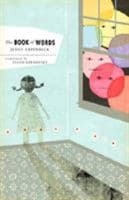
Jenny Erpenpeck is so talented, she has the skills and the knowhow, and the theatrical panache, to make it really big in American letters just as she has captivated Eoreupe by the simple beauty of her voice. Like Isak Dinesen, she embodies a certain European allegorization of experience, so that we seem to be reading her through, I don't know, Alencon lace, with all of experience translated for us already by the deep mulch of German thought and philosophy. She's young, of course, where Isak Dinesen was rather old--born old I almost thought. Erpenbeck doesn't have Dinesen's huge cavities of wrinkle, and the New Directions people capitalized on her fresh-faced appeal by publishing her book with a moonfaced, ecstatic child on its cover, a child carved out of wood like a ventriloquist's dummy. After the first story is finished, we understand why, for the "old child," who winds up in an old world oprhanage and is mistreated by everyone around her, nevertheless maintains a quizzical, baroque power that stems from not having given up all of her secrets (unlike the confessional, shallow, Jerry Springer contestants who make up the cadre of Jenny Erpenbeck's op[pposite numbers in American letters). She has secrets she has shared with nobody--a saucerful. "She apppears to herself like someone who has been charred into a little ball, someone who has been charred in time as in a fire and is now nothing more than a blackened lump that has been deposited in a home for children." I take it that the orphanage represents a larger social entity, perhaps the two halves of a Germany split by V-E day into a capitalist and a communist nation, but Erpenbeck slyly does not allow us to make the one-on-one equivalence you might find in a Burt Kennedy film. She is after more enigmatic fare. If you can imagine a female Antonioni, one with the interest in body imagery and bodily functions of Janine Antoni--sort of a cross between Antonioni and Antoni--she might be the heralded next big thing in German writing, ably translated by Susan Bernofsky, who did so well by Robert Walser in THE ROBBER and the magnificent translation of MASQUERADE, and now she has a female subject from which to speak as only she can.