


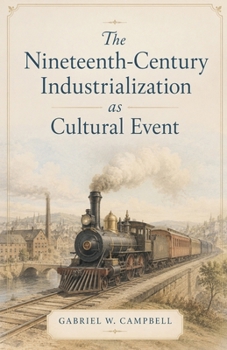
The Nineteenth-Century Industrialization as Cultural Event

Industrialization in the nineteenth century has long been narrated as an economic and technological transformation, a shift in modes of production, a triumph of machinery, or a reorganization of labor. Yet these familiar narratives, while indispensable, capture only part of the story. What unfolded between roughly 1780 and 1914 was not merely a change in how goods were produced but a profound reorientation of how human beings experienced the world, imagined their futures, understood their identities, and interpreted the meaning of collective life. Industrialization was, in every sense, a cultural event-an upheaval in symbols, values, habits, and expectations that reshaped the texture of everyday existence. To treat it only as an economic revolution is to miss the deeper transformation in consciousness that accompanied the rise of the factory, the railway, the steam engine, and the modern city.
Related Subjects
HistoryCustomer Reviews
ThriftBooks ® and the ThriftBooks ® logo are registered trademarks of Thrift Books Global, LLC
