


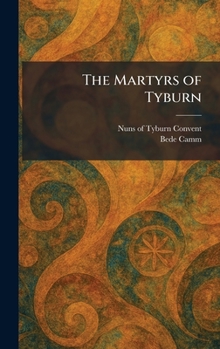
The Martyrs of Tyburn

"The Martyrs of Tyburn" provides a profound and moving account of the men and women who sacrificed their lives for their faith at the infamous Tyburn gallows in London. Written by the nuns of Tyburn Convent in collaboration with the noted Benedictine historian Dom Bede Camm, this work serves as both a historical record and a spiritual tribute to the Catholic martyrs of the English Reformation.
The narrative explores the lives, trials, and final moments of these individuals, offering readers a detailed look at the religious upheavals of the sixteenth and seventeenth centuries. From priests and religious figures to courageous laypeople, the subjects of this volume represent a cross-section of society united by their steadfast commitment to the Catholic Church under the threat of execution. Through careful historical research and a deep sense of devotion, the authors bring to light the stories of those who met their end at the "Tyburn Tree."
This book is an essential resource for those interested in English history, hagiography, and the enduring legacy of Christian martyrdom. It offers a poignant reflection on the cost of religious conviction and remains a significant contribution to the study of post-Reformation Catholicism in Britain.
This work has been selected by scholars as being culturally important, and is part of the knowledge base of civilization as we know it. This work was reproduced from the original artifact, and remains as true to the original work as possible. Therefore, you may see the original copyright references, library stamps (as most of these works have been housed in our most important libraries around the world), and other notations in the work.
This work is in the public domain in the United States of America, and possibly other nations. Within the United States, you may freely copy and distribute this work, as no entity (individual or corporate) has a copyright on the body of the work.
As a reproduction of a historical artifact, this work may contain missing or blurred pages, poor pictures, errant marks, etc. Scholars believe, and we concur, that this work is important enough to be preserved, reproduced, and made generally available to the public. We appreciate your support of the preservation process, and thank you for being an important part of keeping this knowledge alive and relevant.
Customer Reviews
ThriftBooks ® and the ThriftBooks ® logo are registered trademarks of Thrift Books Global, LLC
