


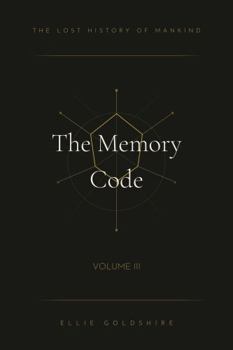
The Lost History of Mankind: The Memory Code

Select Format
Select Condition 
Book Overview
What if it was never destroyed - only hidden?
Volume I asked what happened to the world. Volume II asked what happened to us. The Memory Code asks the question both were building toward: if something was taken, where did it go - and can we get it back?
Because confiscation implies survival. You do not confiscate what you can destroy. And scattered across ten thousand years of the human record is a persistent, inconvenient suggestion that what was taken was not erased but stored - some of it in stone, some of it in story, some of it in us.
This volume follows that trail inward. It begins with the part that can be measured: mathematics encoded in monuments with a precision that survives every translation, because geometry needs none. It moves to the places those monuments stand, and the strange consistency of what instruments record there - resonant chambers, energy lines, sites that behave less like tombs than like equipment. It stops with the individuals history cannot quite account for, the ones who seemed to be reading from a book the rest of us lost. Then it goes where the evidence has been pointing all along: past the stones, past the sites, past the geniuses, to the instrument you are using to read this sentence.
Mystery schools that taught in secret and initiated in the dark. Cycles of return written into the sky. And the trilogy's sharpest claim - that human consciousness as we experience it may be a reduced version of its original specification, and that the architecture of forgetting was never quite complete.
We were taught to file all of this under mysticism. This book files it under memory.
The conclusions are yours - more so here than in either volume before it, because the subject of this one is the thing doing the concluding. This is not a call to believe. It is an invitation to look.
Come with questions, not beliefs.
Volume III of the Lost History of Mankind trilogy.
Customer Reviews
ThriftBooks ® and the ThriftBooks ® logo are registered trademarks of Thrift Books Global, LLC
