


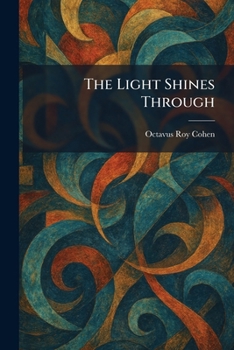
The Light Shines Through

Select Format
Select Condition 
Book Overview
"The Light Shines Through" is a compelling drama that explores the complexities of social reputation, personal redemption, and the enduring power of love. Set against the backdrop of the early 20th century, the narrative follows a protagonist grappling with the shadows of his past while striving to forge a brighter future. As he navigates the rigid social structures of his time, he must confront both external prejudices and his own internal struggles to achieve a sense of peace and belonging.
Octavus Roy Cohen, a prolific voice in early American fiction, provides a poignant look at the human condition through a story that balances narrative tension with emotional depth. The novel examines the themes of integrity and the possibility of a second chance in a world that is often quick to judge and slow to forgive. "The Light Shines Through" remains a testament to the author's ability to capture the nuances of human relationships and the resilience of the human spirit. Readers interested in classic fiction and narratives of personal growth will find this work both engaging and thought-provoking.
This work has been selected by scholars as being culturally important, and is part of the knowledge base of civilization as we know it. This work was reproduced from the original artifact, and remains as true to the original work as possible. Therefore, you may see the original copyright references, library stamps (as most of these works have been housed in our most important libraries around the world), and other notations in the work.
This work is in the public domain in the United States of America, and possibly other nations. Within the United States, you may freely copy and distribute this work, as no entity (individual or corporate) has a copyright on the body of the work.
As a reproduction of a historical artifact, this work may contain missing or blurred pages, poor pictures, errant marks, etc. Scholars believe, and we concur, that this work is important enough to be preserved, reproduced, and made generally available to the public. We appreciate your support of the preservation process, and thank you for being an important part of keeping this knowledge alive and relevant.
Customer Reviews
ThriftBooks ® and the ThriftBooks ® logo are registered trademarks of Thrift Books Global, LLC
