


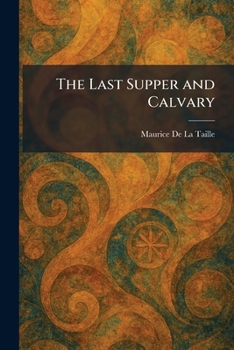
The Last Supper and Calvary

"The Last Supper and Calvary" is a profound theological exploration of the relationship between Christ's institution of the Eucharist and His sacrifice on the Cross. Written by the esteemed Jesuit theologian Maurice de la Taille, this work serves as a cornerstone of early 20th-century Catholic sacramental theology. It examines the unity of the Paschal Mystery, arguing that the Last Supper and the events of Calvary constitute a single, indivisible sacrifice.
The text delves into the liturgical and dogmatic aspects of the Mass, articulating how the ritual offering at the Cenacle relates to the historical immolation on the Hill of Golgotha. De la Taille provides a rigorous defense of traditional doctrines while offering unique insights into the nature of Christ's priesthood and the continuous presence of His sacrifice in the life of the Church. This volume is an essential resource for scholars, clergy, and lay readers interested in the development of Eucharistic thought and the profound mysteries of the Christian faith. It remains a significant contribution to the study of the atonement and the sacrificial nature of the liturgy.
This work has been selected by scholars as being culturally important, and is part of the knowledge base of civilization as we know it. This work was reproduced from the original artifact, and remains as true to the original work as possible. Therefore, you may see the original copyright references, library stamps (as most of these works have been housed in our most important libraries around the world), and other notations in the work.
This work is in the public domain in the United States of America, and possibly other nations. Within the United States, you may freely copy and distribute this work, as no entity (individual or corporate) has a copyright on the body of the work.
As a reproduction of a historical artifact, this work may contain missing or blurred pages, poor pictures, errant marks, etc. Scholars believe, and we concur, that this work is important enough to be preserved, reproduced, and made generally available to the public. We appreciate your support of the preservation process, and thank you for being an important part of keeping this knowledge alive and relevant.
Customer Reviews
ThriftBooks ® and the ThriftBooks ® logo are registered trademarks of Thrift Books Global, LLC
