


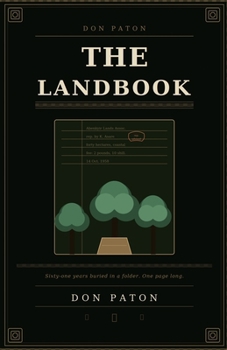
The Landbook

In October 1958, a well-dressed lawyer from Accra sits across from a farming cooperative's representative and explains, carefully and warmly, that the papers in front of him will protect the land his family has worked for three generations. Kweku Asare believes him. He signs. He is not wrong to trust a professional man who uses careful language and charges a modest fee. He is only wrong about what the papers actually say.
Sixty-one years later, environmental lawyer Adwoa Mensah-Cobbina drives down a Ghanaian coastal road to assess forty hectares of forest for a carbon credit scheme. What she finds instead is a receipt in a laminated sleeve, a fisherman named Yaw who has never seen the actual title to his own grandfather's land, and a Lands Commission archive that has been waiting sixty-one years for someone to ask the right question.
What Adwoa uncovers is not a crime in the way the word is usually meant. Every signature is real. Every document is properly stamped. The land was never stolen; it was simply registered, in a single quiet morning, to someone else, using language precise enough to be true and incomplete enough to deceive. As she traces the paper trail from a 1958 transfer instrument through a 2006 environmental exemption to a present-day development company with a Singapore address, she finds a notary's forgotten handwriting, an unanswered sixty-year-old letter, and a woman named Akua who inherited a fortune without ever being told what it cost.
THE LANDBOOK is set against the real, documented history of Ghana's post-independence land registration system, when a transitional window between colonial and national frameworks let lawyers who understood the gap register unclaimed community land in their own names before the communities who had farmed it for generations even knew there was a race to win. The specific families, companies, and legal firms in this novel are invented. The mechanism is not.
This is a novel about the particular cruelty of correct paperwork. About what a family inherits along with a fortune, and what another family inherits along with a grievance it cannot quite prove. About a receipt kept in a Bible for sixty-one years by a woman who was never entirely at peace, and about what it costs, and what it is finally worth, to write down what actually happened.
Customer Reviews
ThriftBooks ® and the ThriftBooks ® logo are registered trademarks of Thrift Books Global, LLC
