


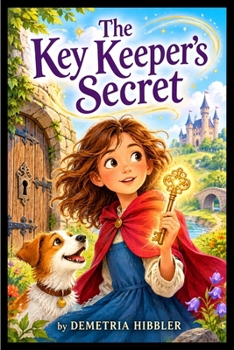
The Key Keeper's Secret

When Princess Amabel enters the abandoned South Wing of Oakhaven Palace, she expects to find the hidden fortune her failing kingdom desperately needs. Instead, her inheritance is a black ebony chest containing one thousand keys-crafted from iron, brass, glass, bone, and silver, with no labels and no explanation. The first key opens nothing. The others seem equally impossible, and the royal mechanist Julian Mercer cannot explain their strange behavior.With the Regency Council threatening to seize the crown and sell the palace to settle its debts, Amabel has little time to solve her aunt Genevieve's baffling bequest. Yet each key leads her to a sealed room, a forgotten threshold, or a piece of the kingdom's history that official records have erased. The keys resist ordinary tools and behave as though they can sense when they are watched. Their secrets suggest that Oakhaven's grand architecture is more than a royal fortress: it is a prison built to contain the very memories and wonders that once gave the kingdom life.As Amabel follows the trail, the mystery of Genevieve deepens. The royal archives deny that her aunt ever existed, while physical evidence insists otherwise. A letter in a familiar hand and the thousandth key reveal a truth that reaches across a century-and turns Amabel's inheritance into a choice about the future of the throne itself.The Key Keeper's Secret is a richly atmospheric fantasy of enchanted mechanisms, hidden histories, and time-bending inheritance. At its heart is a princess who must decide whether to preserve a dying system or unlock the way out, even if doing so means surrendering the identity she has always known.In the palace's abandoned wings, mechanisms answer to touch, memory, and even the absence of a watching eye. Amabel must learn to approach each threshold on its own terms, while the council's agents close in and Julian risks his position to help her. The deeper she goes, the less certain she can be that the past is fixed-or that the woman who left the keys behind was someone other than herself. The thousand keys are not a collection of curiosities; together, they form a map of the choices one woman could not complete the first time.
Customer Reviews
ThriftBooks ® and the ThriftBooks ® logo are registered trademarks of Thrift Books Global, LLC
