


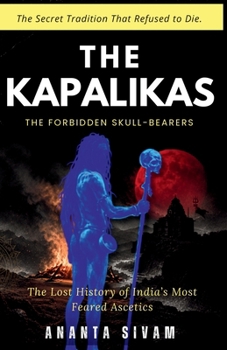
The Kapalikas: The Forbidden Skull-Bearers

I have sat in cremation grounds at midnight, in temple storerooms where the caretaker unwraps a skull bowl only after three days of earned trust, and in a Bhairava shrine outside Varanasi where a priest still will not say plainly what his family has protected for generations. What I found, chasing this order across Maharashtra, Kerala, Chhattisgarh, and the Himalayan regions, is a history far stranger and far more coherent than the caricature that has replaced it.
The Kapalikas were real. For centuries they walked the burning grounds of the Indian subcontinent, ash-smeared, hair uncut, a human skull carried at the hip as both alms bowl and doctrine. Orthodox society feared them enough to write them into drama as villains, feared them enough to eventually erase them from the historical record almost entirely. What survived is fragments: hostile Sanskrit polemic, dramatic caricature, inscriptions, and a current that runs, transformed, into the Aghor and Kaula traditions still practiced today.
This book is not a sadhana manual, and it will not teach you to walk this path. It is the history I could not find assembled anywhere else: the mahavrata penance behind the skull, the Bhairava theology that grounded it, the caste politics that cast the order out, the feared powers attributed to them by a society that never dared test the claim, and the long chain of distortion, from Sanskrit theater to colonial ethnography to modern pop-occulture, that turned a real ascetic discipline into a cannibal-sadhu cliche.
If you came looking for shock, you will find instead something more unsettling: a demanding, transgressive, genuinely coherent spiritual path, taken seriously on its own terms for the first time in a book written for a Western reader.
Customer Reviews
ThriftBooks ® and the ThriftBooks ® logo are registered trademarks of Thrift Books Global, LLC
