


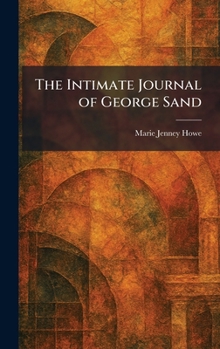
The Intimate Journal of George Sand

"The Intimate Journal of George Sand" offers a profound and deeply personal glimpse into the inner life of one of the nineteenth century's most influential and unconventional literary figures. This collection captures the raw emotional landscapes of George Sand, born Amantine Lucile Aurore Dupin, as she navigates the complexities of love, creativity, and identity. Central to the volume is Sand's passionate and tumultuous journal addressed to the poet Alfred de Musset, revealing the intense psychological depth of their relationship and her struggle for emotional independence.
Beyond her romantic entanglements, the journal illuminates Sand's philosophical reflections and her unwavering commitment to her art and social ideals. As a pioneer of women's literature, Sand's private writings provide essential context for her celebrated novels and her role in the Romantic movement. This work serves as a vital historical document, showcasing the vulnerability and strength of a woman who defied the social conventions of her time. "The Intimate Journal of George Sand" remains a compelling read for those interested in literary history, women's studies, and the enduring power of the written word to explore the human soul.
This work has been selected by scholars as being culturally important, and is part of the knowledge base of civilization as we know it. This work was reproduced from the original artifact, and remains as true to the original work as possible. Therefore, you may see the original copyright references, library stamps (as most of these works have been housed in our most important libraries around the world), and other notations in the work.
This work is in the public domain in the United States of America, and possibly other nations. Within the United States, you may freely copy and distribute this work, as no entity (individual or corporate) has a copyright on the body of the work.
As a reproduction of a historical artifact, this work may contain missing or blurred pages, poor pictures, errant marks, etc. Scholars believe, and we concur, that this work is important enough to be preserved, reproduced, and made generally available to the public. We appreciate your support of the preservation process, and thank you for being an important part of keeping this knowledge alive and relevant.
Customer Reviews
ThriftBooks ® and the ThriftBooks ® logo are registered trademarks of Thrift Books Global, LLC
