


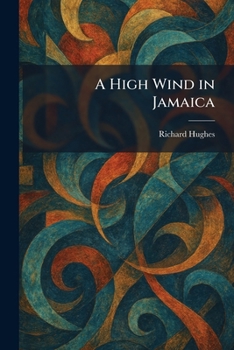
A High Wind in Jamaica


Select Format
Select Condition 
Book Overview
"A High Wind in Jamaica" is a startling and provocative masterpiece of psychological fiction that challenges traditional perceptions of childhood innocence. Following a devastating hurricane in Jamaica, the Bas-Thornton children are sent toward England for their education, but their journey takes a harrowing turn when their vessel is captured by a band of pirates. What follows is not a conventional tale of adventure, but a complex exploration of the moral divide between the adult world and the enigmatic minds of the young.
As the children adapt to their life among the outlaws with unsettling ease, Richard Hughes exposes the ruthless logic of childhood and the fragility of societal norms. Set against the vivid backdrop of the high seas, the novel subverts the tropes of maritime literature to deliver a chillingly unsentimental portrait of human nature. Renowned for its sharp prose and profound psychological insights, "A High Wind in Jamaica" remains a landmark work of 20th-century literature, questioning whether the true danger lies with the outlaws of the sea or within the inscrutable hearts of the children themselves.
This work has been selected by scholars as being culturally important, and is part of the knowledge base of civilization as we know it. This work was reproduced from the original artifact, and remains as true to the original work as possible. Therefore, you may see the original copyright references, library stamps (as most of these works have been housed in our most important libraries around the world), and other notations in the work.
This work is in the public domain in the United States of America, and possibly other nations. Within the United States, you may freely copy and distribute this work, as no entity (individual or corporate) has a copyright on the body of the work.
As a reproduction of a historical artifact, this work may contain missing or blurred pages, poor pictures, errant marks, etc. Scholars believe, and we concur, that this work is important enough to be preserved, reproduced, and made generally available to the public. We appreciate your support of the preservation process, and thank you for being an important part of keeping this knowledge alive and relevant.
Customer Reviews
Luminously True Classic of Childhood
Riding The Torrent
Paradise Lost
One of the greatest novels I've ever read
A picaresque novel for child psychologists
ThriftBooks® and the ThriftBooks® logo are registered trademarks of Thrift Books Global, LLC
