


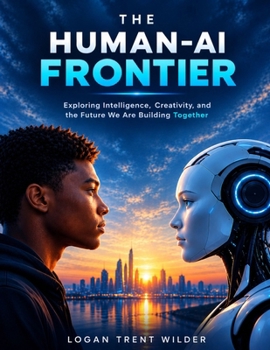
The Human-AI Frontier: Exploring Intelligence, Creativity, and the Future We Are Building Together

What happens when machines begin to learn, create, reason, and work alongside human beings?
Artificial intelligence is changing how we understand intelligence, approach creativity, solve problems, and imagine the future. From systems that recognize images and generate content to intelligent assistants, autonomous machines, and scientific discoveries, AI is moving beyond traditional computing and reshaping the relationship between humans and technology.
The Human-AI Frontier takes you on a journey through this transformation, explaining how artificial intelligence evolved, what modern AI can do, where its limitations remain, and how it may influence the world we are building.
Inside this book, you will explore:
The Nature of Intelligence: Understand human intelligence, its different forms, and the questions surrounding machine intelligence.
The Evolution of AI: Discover how artificial intelligence developed from early mechanical computing and rule-based systems to modern machine learning and deep learning.
Generative AI and Creativity: Explore how AI produces text, images, music, video, and code-and what these capabilities mean for creativity.
Machine Reasoning and Intelligent Agents: Learn about AI reasoning, tool use, autonomous systems, and the continuing challenges of reliable machine intelligence.
The Future of Work: Examine how AI is changing jobs, transforming skills, and creating new possibilities for human-AI collaboration.
Robotics and the Physical World: Discover how AI is being applied to autonomous vehicles, engineering, scientific research, and exploration.
Humanity, Ethics, and Responsibility: Consider questions about creativity, consciousness, privacy, bias, misinformation, safety, and the responsible development of AI.
The Future Ahead: Explore how human choices, values, and decisions will influence the role AI plays in society.
Whether you are new to artificial intelligence or already familiar with its technologies, this book offers an accessible path from foundational concepts to the bigger questions shaping the AI era. It connects technical developments with their practical, creative, professional, and societal implications.
Rather than treating AI as either a threat to humanity or a solution to every problem, this book encourages a more thoughtful perspective-one that recognizes both its possibilities and its limitations.
The future of intelligence is not simply about what machines can do. It is also about what people choose to create, protect, and achieve with them.
Step into The Human-AI Frontier and explore the intelligence, creativity, and human choices shaping our shared future.
Customer Reviews
ThriftBooks ® and the ThriftBooks ® logo are registered trademarks of Thrift Books Global, LLC
