


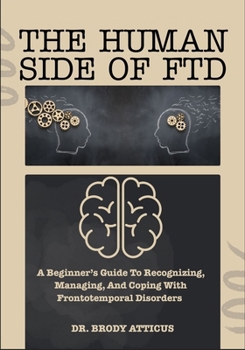
The Human Side of Ftd: A Beginner's Guide To Recognizing, Managing, And Coping With Frontotemporal Disorders
No Customer Reviews

Frontotemporal Disorders (FTD), often referred to collectively as frontotemporal lobar degeneration (FTLD), represent a group of complex and diverse neurodegenerative conditions characterized primarily by progressive deterioration of the frontal and temporal lobes of the brain. These regions are crucial for controlling behavior, personality, language, and executive functions, meaning that FTD profoundly impacts an individual's cognition, emotional regulation, communication, and social interaction. Unlike other more widely recognized dementias such as Alzheimer's disease, which predominantly affect memory in the early stages, FTD primarily disrupts behavior, language, and decision-making abilities, often manifesting earlier in life - typically between the ages of 40 and 65.
The Uniqueness of Frontotemporal Disorders:
One of the defining features of FTD is its clinical and pathological heterogeneity. The symptoms and progression can vary widely, even among those diagnosed with the disorder, leading to multiple subtypes that challenge clinicians and caregivers alike. For example, some individuals initially experience marked changes in personality and behavior, while others first struggle with language difficulties, such as speaking or understanding speech. These variants are commonly classified as behavioral variant frontotemporal dementia (bvFTD) and primary progressive aphasia (PPA), respectively. Additionally, FTD can sometimes overlap with motor disorders, including amyotrophic lateral sclerosis (ALS), further complicating diagnosis and care.
Understanding the Biological Basis:
FTD is caused by the progressive loss of neurons in the frontal and temporal lobes, but the exact biological mechanisms are complex and not yet fully understood. Research has identified various abnormal protein accumulations in the brain cells of affected individuals-such as tau, TDP-43, or fused in sarcoma (FUS) proteins-which disrupt normal cellular function and lead to neurodegeneration. Some forms of FTD have a genetic basis, with mutations in specific genes passed down through families, while others appear sporadically without a clear hereditary link. This growing body of scientific knowledge holds promise for future targeted therapies.
The Need for Awareness and Early Recognition:
Despite being one of the more common forms of early-onset dementia, Frontotemporal Disorders remain underrecognized and frequently misdiagnosed, often confused with psychiatric conditions such as depression, bipolar disorder, or schizophrenia due to overlapping symptoms. This lack of awareness contributes to delays in diagnosis and care, which can exacerbate the challenges faced by patients and their families. Early and accurate diagnosis is crucial not only for managing symptoms and planning care but also for accessing resources, support, and potential clinical trials.
Purpose of This Guide:
This guide is designed to demystify Frontotemporal Disorders by providing a clear, compassionate, and practical resource for patients, families, caregivers, and healthcare professionals. It will explore the nature of the disease, how to recognize early signs, and what steps to take following diagnosis. It will cover management strategies, including medical treatments, behavioral interventions, and supportive therapies, as well as guidance on navigating the emotional, social, and legal complexities that accompany FTD. By equipping readers with knowledge and tools, this book aims to foster understanding, empower decision-making, and enhance quality of life for those affected by this challenging group of disorders.
The Uniqueness of Frontotemporal Disorders:
One of the defining features of FTD is its clinical and pathological heterogeneity. The symptoms and progression can vary widely, even among those diagnosed with the disorder, leading to multiple subtypes that challenge clinicians and caregivers alike. For example, some individuals initially experience marked changes in personality and behavior, while others first struggle with language difficulties, such as speaking or understanding speech. These variants are commonly classified as behavioral variant frontotemporal dementia (bvFTD) and primary progressive aphasia (PPA), respectively. Additionally, FTD can sometimes overlap with motor disorders, including amyotrophic lateral sclerosis (ALS), further complicating diagnosis and care.
Understanding the Biological Basis:
FTD is caused by the progressive loss of neurons in the frontal and temporal lobes, but the exact biological mechanisms are complex and not yet fully understood. Research has identified various abnormal protein accumulations in the brain cells of affected individuals-such as tau, TDP-43, or fused in sarcoma (FUS) proteins-which disrupt normal cellular function and lead to neurodegeneration. Some forms of FTD have a genetic basis, with mutations in specific genes passed down through families, while others appear sporadically without a clear hereditary link. This growing body of scientific knowledge holds promise for future targeted therapies.
The Need for Awareness and Early Recognition:
Despite being one of the more common forms of early-onset dementia, Frontotemporal Disorders remain underrecognized and frequently misdiagnosed, often confused with psychiatric conditions such as depression, bipolar disorder, or schizophrenia due to overlapping symptoms. This lack of awareness contributes to delays in diagnosis and care, which can exacerbate the challenges faced by patients and their families. Early and accurate diagnosis is crucial not only for managing symptoms and planning care but also for accessing resources, support, and potential clinical trials.
Purpose of This Guide:
This guide is designed to demystify Frontotemporal Disorders by providing a clear, compassionate, and practical resource for patients, families, caregivers, and healthcare professionals. It will explore the nature of the disease, how to recognize early signs, and what steps to take following diagnosis. It will cover management strategies, including medical treatments, behavioral interventions, and supportive therapies, as well as guidance on navigating the emotional, social, and legal complexities that accompany FTD. By equipping readers with knowledge and tools, this book aims to foster understanding, empower decision-making, and enhance quality of life for those affected by this challenging group of disorders.
Format:Paperback
Language:English
ISBN:B0FNKHL1HC
ISBN13:9798299344059
Release Date:August 2025
Publisher:Independently Published
Length:78 Pages
Weight:0.33 lbs.
Dimensions:0.2" x 7.0" x 10.0"
Customer Reviews
0 rating
Copyright © 2026 Thriftbooks.com
Terms of Use | Privacy Policy | Do Not Sell/Share My Personal Information | Cookie Policy | Cookie Preferences | Accessibility Statement
ThriftBooks ® and the ThriftBooks ® logo are registered trademarks of Thrift Books Global, LLC
ThriftBooks ® and the ThriftBooks ® logo are registered trademarks of Thrift Books Global, LLC
