


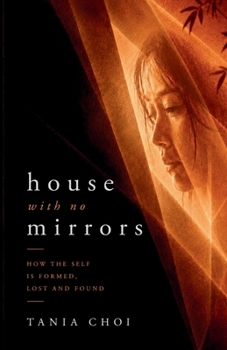
The House with No Mirrors

You were never taught to doubt yourself.
You were taught to become someone else.
We've been told that healing begins with self-love. That if we could simply think differently, love ourselves more, or become more authentic, we would finally feel whole.
But before there can be self-love, there must first be a Self.
What if the question was never, How do I love myself?
What if the question is, How does a Self come to exist in the first place?
Long before language, achievement, or identity, the Self is formed in relationship.
It is built through thousands of ordinary moments in which a child is accurately seen, reflected, and known.
When those reflections are missing, children do not stop developing.
They adapt.
Some become exceptional.
Some become responsible for everyone else.
Some tell the truth no one wants to hear.
Some disappear.
Some become whoever they need to be to remain loved.
These are not personality types. They are the Mirror Children(TM)-brilliant developmental adaptations that once protected connection, even as they eclipsed the Self.
Weaving memoir, developmental psychology, attachment theory, neuroscience, and decades of clinical work, The House With No Mirror explores how the Self is formed, what happens when those developmental mirrors are missing, and why so many adults feel as though they have spent a lifetime performing instead of living.
Drawing from her work as a psychotherapist and from her own story growing up between cultures, Singapore-born Tania Choi introduces the Mirror Children(TM)-five relational adaptations that explain how we lose ourselves in order to stay connected, and how that Self can begin to return through Relational Repair.
Perhaps you were never broken.
Perhaps no one ever reflected you clearly enough for a Self to fully emerge.
And perhaps what you've been searching for all these years was never gone.
It has been waiting, patiently, for someone to finally see it.
Related Subjects
PsychologyCustomer Reviews
ThriftBooks ® and the ThriftBooks ® logo are registered trademarks of Thrift Books Global, LLC
