


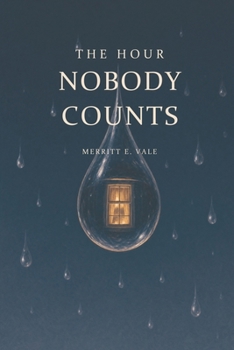
The Hour Nobody Counts

Marisol Kerr has worked nights on the same ward for twenty years. She's the one who stays when the rota runs short, who sits with the dying so that nobody goes out of the world alone - the one everybody leans on and nobody thinks to count. She's good at it. Nobody asks what it costs.
Then, deep into a winter night that asks more of her than she has left, the rain over the car park stops. Not eases - stops, every drop of it standing where it hung. The ward clock gives up the space it keeps between seconds. And down the corridor comes Leon Casimir, the old baker from side room two, who hasn't known her name in two years - awake in every part of himself, unhurried, asking her kindly how long this has been happening to her.
The held hour has rules, and nobody posts them. They're handed down the way house rules are, by the worn-through few it comes for. It can't be called, and it can't be kept. Inside it, minds the clock has broken are whole again. And it's real time, lived and spent - everyone awake inside the hour comes out of it older. The first rule is the oldest one they teach her: not for yourself. Never for yourself.
What Casimir wants with his hours isn't more of them. It's his daughter. Marta keeps his bakery and his opening times, and no longer comes past his door - and anything he means to leave her must cross into daylight by the hour's narrowest law: what leaves, leaves in one hand. So begins a small impossible project on a night ward, between a nurse who gives everything away and a man with one winter left to spend - the last thing a father gets to say, and the only way left on earth to say it.
If an hour of being wholly yourself - or wholly with someone the years have taken - cost you a day of your life, would you spend it? And who would you spend it on?
A standalone novel. Complete in itself.
Customer Reviews
ThriftBooks ® and the ThriftBooks ® logo are registered trademarks of Thrift Books Global, LLC
