


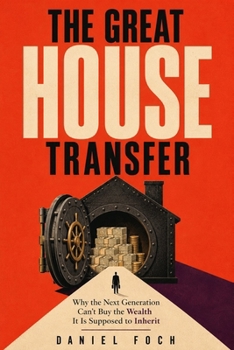
The Great House Transfer

The Great Wealth Transfer was supposed to be an inheritance boom. It may become a housing collision instead.
For decades, middle-class wealth in the Western world has been pushed into one asset: the family home. Houses became retirement plans, inflation hedges, forced savings accounts, tax shelters, status symbols, and the foundation of household security.
But there is a problem: the same homes older generations need to sell, borrow against, or pass down are increasingly unaffordable to the younger generations expected to buy them.
The Great House Transfer argues that the coming generational wealth shift will not be a smooth handoff of cash, stocks, and businesses. For most families, it will be a transfer of housing wealth, housing debt, housing scarcity, and housing risk.
Daniel Foch examines how cheap credit, zoning, tax policy, demographics, financialized household psychology, and political incentives turned housing into the dominant store of middle-class wealth. He shows why this system is now reaching its limits: older owners need liquidity, younger buyers lack income and borrowing capacity, governments are trapped between affordability and asset-price protection, and households are discovering that paper wealth is not the same as real security.
This book is not housing crash pandering. It is not anti-homeowner. It is not a partisan sermon.
It is a warning about what happens when an economy organizes itself around bidding up land instead of building productive wealth.
The Great House Transfer is coming one way or another. The question is whether we understand it before it happens, and whether we can avoid rebuilding the same machine after it breaks.
Customer Reviews
ThriftBooks ® and the ThriftBooks ® logo are registered trademarks of Thrift Books Global, LLC
