


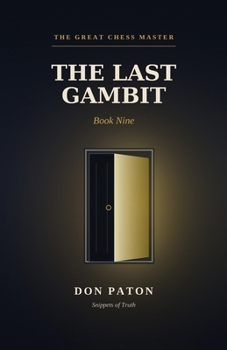
The Great Chess master: The Last Gambit

He has tried force. He has tried comfort. Both have failed for the same reason, though it has taken him eight books to stop calling the failure bad luck.
This time he tries a door.
No violence in it, and no visible cost to walk through. Only a single quiet gesture, offered honestly, that leaves a room exactly as it was, except for one thing nobody in it can any longer be certain of: which of their neighbors already walked through it.
A teacher who has taught an unbending conviction for thirty years discovers, on a single unbearable morning, the exact limit his own body was carrying without his permission. A dye merchant makes a choice in a matter of minutes and carries it alone for two years rather than let her own husband share its weight. A provincial clerk, sworn to serve a machinery he did not build and cannot openly resist, finds the one narrow seam inside it where careful competence can be quietly turned toward mercy instead, at a cost only he will ever know he paid.
None of them know, watching each other across the years this book describes, which kind of secret their own oldest friends might be carrying. Neither will you, for most of it.
Two edicts, five years, and a whole gathering forced to discover what it actually believes about forgiveness, once the empire that persecuted it collapses under its own weight and the only people left to answer for the years just passed are each other.
Book Nine of The Great Chess Master. The sharpest weapon he has ever built, and the one built, without his ever understanding it, out of the exact material mercy needed all along.
Customer Reviews
ThriftBooks ® and the ThriftBooks ® logo are registered trademarks of Thrift Books Global, LLC
