


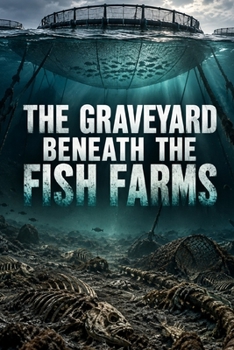
The Graveyard Beneath the Fish Farms

What lies beneath the surface of industrial fish farming?
Across the world's coastal waters, fish farms promise a reliable source of seafood. But beneath the floating cages, a different story may be unfolding: organic pollution, oxygen-depleted sediments, damaged habitats and mounting pressure on marine wildlife.
The Graveyard Beneath the Fish Farms examines the hidden environmental costs of marine aquaculture, exploring what happens when intensive fish production places more pressure on coastal ecosystems than they can absorb.
Using Greece's Amvrakikos Gulf as a central case study, alongside scientific research from the Mediterranean and beyond, this book investigates the complex relationship between fish farming, marine biodiversity and environmental protection.
Inside, discover:
How fish waste and uneaten feed affect the seabed and water quality.
Why oxygen depletion threatens marine organisms and entire ecosystems.
How aquaculture can affect seagrass meadows, wild fish and other marine wildlife.
The ecological risks associated with escaped farmed fish, diseases and parasites.
The environmental legacy of abandoned fish farms and damaged infrastructure.
Why environmental monitoring, responsible site selection and stronger oversight matter.
Combining marine ecology, scientific evidence and practical conservation perspectives, this book goes beyond the visible fish cages to examine the wider consequences for coastal environments.
It also recognises that environmental impacts vary between sites and farming practices, and considers how better management could reduce ecological harm.
A thought-provoking examination of what happens beneath fish farms, why it matters, and what can be done to protect marine life.
For readers interested in marine biology, environmental science, aquaculture, ocean conservation and the future of our seas.
Related Subjects
NatureCustomer Reviews
ThriftBooks ® and the ThriftBooks ® logo are registered trademarks of Thrift Books Global, LLC
