


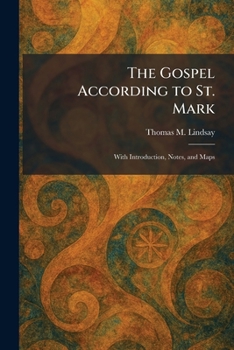
The Gospel According to St. Mark: With Introduction, Notes, and Maps

"The Gospel According to St. Mark: With Introduction, Notes, and Maps" offers a meticulous and scholarly exploration of the second Gospel. Authored by the respected theologian Thomas M. Lindsay, this volume is specifically designed to assist readers in navigating the historical, linguistic, and theological complexities of Mark's account of the life of Jesus. The work features a comprehensive introduction that outlines the authorship, date, and unique characteristics of this Gospel, providing essential context for both students and lay readers.
The core of the work consists of the scriptural text accompanied by extensive explanatory notes that clarify difficult passages and provide cultural insights into the New Testament world. A distinctive feature of this study is the inclusion of detailed maps, which allow the reader to visually trace the ministry of Christ across the landscapes of Galilee and Judea. By grounding the spiritual narrative in physical geography and historical rigor, Lindsay highlights the vividness and urgency inherent in Mark's writing. This volume serves as an invaluable resource for personal study, academic research, or teaching, preserving a significant contribution to biblical scholarship that remains relevant for those seeking a deeper understanding of the Christian foundations.
This work has been selected by scholars as being culturally important, and is part of the knowledge base of civilization as we know it. This work was reproduced from the original artifact, and remains as true to the original work as possible. Therefore, you may see the original copyright references, library stamps (as most of these works have been housed in our most important libraries around the world), and other notations in the work.
This work is in the public domain in the United States of America, and possibly other nations. Within the United States, you may freely copy and distribute this work, as no entity (individual or corporate) has a copyright on the body of the work.
As a reproduction of a historical artifact, this work may contain missing or blurred pages, poor pictures, errant marks, etc. Scholars believe, and we concur, that this work is important enough to be preserved, reproduced, and made generally available to the public. We appreciate your support of the preservation process, and thank you for being an important part of keeping this knowledge alive and relevant.
Customer Reviews
ThriftBooks ® and the ThriftBooks ® logo are registered trademarks of Thrift Books Global, LLC
