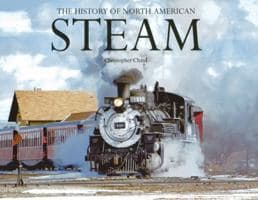
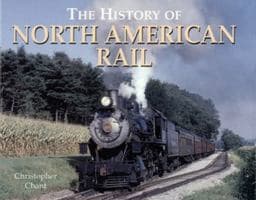
Although the original concept of the train is to be found in late medieval times, and the use of steam power for locomotives emerged during the Industrial Revolution of the 18th century, the steam powered train really came of age in the Victorian era of the 19th century. At this time there was an explosion of technical ideas and this combined with greater national wealth and a rapidly changing social and economic climate to spur a railway boom. Rail lines spread over every part of the world where there was a social and economic advantage to be gained, and there was an extraordinarily rapid development in the speed and capacity of the steam locomotives hauling the services on these lines.
Within 75 years the railroad had become the standard means of mass transportation in most parts of the world, and on the steam locomotives reigned supreme until the widespread adoption of diesel - and electric-powered locomotives shortly before and then comprehensively after World War II. Despite this fact, the steam locomotive is still widely employed in less rich areas of the world where there is an abundance of readily available coal. Thus the steam locomotive, with a high level of reliability resulting from its descent from over-engineered Victorian practices, is still alive and will in areas such as the Indian subcontinent, the Far East, and many parts of Africa and Latin America. This description may be from another edition of this product.