


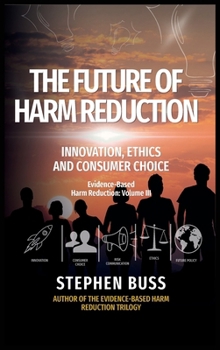
The Future of Harm Reduction: Innovation, Ethics and Consumer Choice

The Future of Harm Reduction
Innovation, Ethics and Consumer Choice
Evidence-Based Harm Reduction: Volume III
Word Count - 316,381
The future of nicotine policy will not be decided by chemistry alone. It will depend on how societies communicate risk, protect young people, respect adult choice, regulate innovation, interpret uncertainty and decide whether harm reduction is a legitimate public health objective or an uncomfortable exception to traditional tobacco control.
The Future of Harm Reduction examines modern nicotine products as part of a broader public health, ethical and technological debate. It considers relative and absolute risk, public misunderstanding, media narratives, fear-based messaging, consumer perception, health literacy and the challenge of communicating scientific uncertainty without distorting the evidence.
This volume explores why people smoke, why they switch, how dependence differs from habit, and why sensory satisfaction, flavour, price, product design and social context influence long-term behaviour. It places vaping alongside pharmaceutical nicotine, oral nicotine products, heated tobacco, synthetic nicotine and future delivery systems, asking how innovation should be governed when both risks and potential benefits are real.
The book also examines harm reduction as a public health principle, drawing comparisons with alcohol policy, drug policy, needle exchange, seat belts and condoms. It addresses the gateway hypothesis, renormalisation, youth uptake, cessation evidence, population modelling, biomarker interpretation, taxation, black markets, healthcare costs, regulatory burden, commercial ethics, academic independence and public accountability.
The final chapters look forward to artificial intelligence, toxicology prediction, exposure modelling, personalised risk assessment, regulatory automation and evidence synthesis. The result is a framework for evidence-based nicotine policy: proportionate, transparent, scientifically literate and grounded in informed consumer choice rather than fear, denial or political convenience.
Customer Reviews
ThriftBooks ® and the ThriftBooks ® logo are registered trademarks of Thrift Books Global, LLC
