


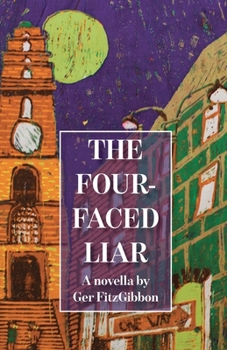
The Four-Faced Liar

The Four-Faced Liar by Ger FitzGibbon is a poetic, atmospheric, and multi-voiced novella that explores Cork city, blending narrative, city sounds, and reflections on its history and character. The book is structured as a "play for voices," with the iconic Shandon Steeple-nicknamed the Four-Faced Liar for its famously inconsistent clocks-serving as an omniscient narrator. Through the Steeple's four distinct voices, the city is observed, critiqued, and affectionately mocked, capturing the rough affection and sharp wit characteristic of Cork.
The narrative unfolds over the course of a single night and into the following day, weaving together the lives, dreams, and memories of a diverse cast of Corkonians. The city itself becomes a living character, its music composed of traffic, rivers, and the cacophony of voices and accents that reflect its social and historical layers. The book is divided into sections-such as "The Sleeping and the Sleepless," "Longings, Ghosts and Memories," and "Unquiet Souls"-each focusing on different inhabitants and their nocturnal experiences.
Key Characters and Vignettes include:
Gussy Barrett: Once a Lord Mayor, now a lonely, drunken figure wandering the city at night, haunted by loss and regret.
Micha Pasternak: A Polish immigrant dreaming of love, her story intertwines with Bertie Murphy, a widowed carpenter who stammers in speech but sings beautifully in dreams.
Afric McHendrick: A teenager navigating friendship and identity, unknowingly corresponding online with Morgan O'Carroll, a respectable undertaker who masquerades as "Roz" in digital spaces.
Emer Foley: A 98-year-old woman, fiercely independent and politically charged, who sleeps under her bed for safety and plots imaginary revolutions with the ghost of her father.
Marky Power: A wealthy but troubled businessman, preoccupied with financial woes and family secrets, whose mother Muriel's death and will reveal hidden histories and ironies.
Garda Karen Crean and Dan Considine: Two police officers on night patrol, their banter and frustrations reflecting the city's undercurrents of boredom, danger, and absurdity.
Throughout, the Four Faces of Shandon provide a running commentary-by turns sardonic, nostalgic, and compassionate-on the city's denizens and their foibles. The narrative is punctuated by the sounds of Cork: the bells of Shandon, the river Lee's flow, late-night revelers, and the ghosts of the city's past. The city's multicultural evolution is acknowledged, with new voices and rhythms enriching its soundscape.
The book is suffused with themes of longing, memory, and the passage of time. Ghosts-both literal and metaphorical-haunt the city, from the Republican dead in St Fin Barr's cemetery to vanished Jewish families and music hall performers. The river Lee, personified as a snake, flows indifferently through the city's joys and sorrows, a symbol of continuity and change.
As dawn breaks, the consequences of the night's events unfold: arrests, revelations, deaths, and small victories. The city's cycle of life continues, observed by the ever-watchful Four Faces. The book closes with a sense of bittersweet acceptance, as the city's inhabitants-living and dead-find moments of connection, forgiveness, and hope amid the ongoing flow of time.
The Four- aced Liar is ultimately a love letter to Cork, capturing its humor, resilience, and complexity through a chorus of voices and a tapestry of stories.
Customer Reviews
ThriftBooks ® and the ThriftBooks ® logo are registered trademarks of Thrift Books Global, LLC
