


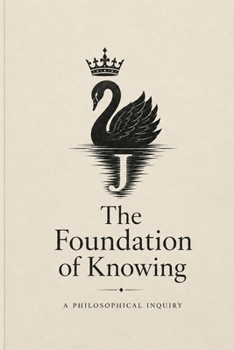
The Foundation of Knowing: A Philosophical Inquiry
No Customer Reviews

A clock that runs four minutes slow is defective, but no one asks it to explain itself. People are different. We ask one another for reasons, accept excuses, withdraw trust, and sometimes say: you should have known better. What, if anything, gives such a demand its force? The Foundation of Knowing begins with the regress of justification and distinguishes epistemic defect from responsibility, blame, wronging, and answerability. It then compares five accounts of the standing behind a demand for reasons: objective normative truth, rational agency, reciprocal authority, social practice, and an unconditioned personal ground. The book does not claim a deductive proof or pretend that the rival accounts have been defeated. The inquiry then turns to the biblical formula "I AM THAT I AM," asking what would count as an address and what the historical evidence can actually establish. In Part IV, the author places his own conviction of calling under the same standards, testing it against chronology, contemporaneous records, clinical assessments, a veterinary record, Christian theology, and the strongest available human explanation. A philosophical and autobiographical inquiry for readers interested in epistemology, philosophy of religion, faith and reason, religious experience, and the ethics of belief.
Format:Paperback
Language:English
ISBN:B0HBHSL8BT
ISBN13:9798188573690
Release Date:July 2026
Publisher:Independently Published
Length:146 Pages
Weight:0.45 lbs.
Dimensions:0.3" x 6.0" x 9.0"
Customer Reviews
0 rating
Copyright © 2026 Thriftbooks.com
Terms of Use | Privacy Policy | Do Not Sell/Share My Personal Information | Cookie Policy | Cookie Preferences | Accessibility Statement
ThriftBooks ® and the ThriftBooks ® logo are registered trademarks of Thrift Books Global, LLC
ThriftBooks ® and the ThriftBooks ® logo are registered trademarks of Thrift Books Global, LLC
