


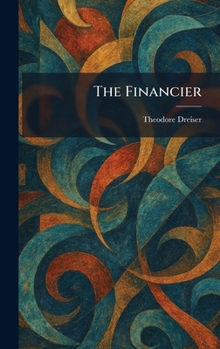
The Financier

"The Financier" is a cornerstone of American literary naturalism and the first volume in Theodore Dreiser's acclaimed "Trilogy of Desire." Set primarily in mid-nineteenth-century Philadelphia, the novel tracks the meteoric rise and moral complexities of Frank Cowperwood, a character based on the real-life streetcar tycoon Charles Yerkes. From a young age, Cowperwood exhibits a cold, calculating intelligence and an unwavering ambition to dominate the world of high finance. As he navigates the volatile stock market and complex political alliances, his journey becomes a profound exploration of the Darwinian struggle for survival within the American capitalist system.
Dreiser masterfully captures the atmosphere of a growing nation, detailing the intricacies of banking, speculation, and the social hierarchies of the Gilded Age. The narrative delves into the intersection of private desire and public ethics, as Cowperwood's personal life and relentless ambition threaten to collapse his financial empire. "The Financier" remains a powerful critique of the American Dream, offering a gritty, realistic portrayal of the pursuit of wealth and the often-ruthless nature of industrial expansion. This work stands as a testament to Dreiser's ability to weave exhaustive detail with grand philosophical themes, securing its place as a vital study of the American character.
This work has been selected by scholars as being culturally important, and is part of the knowledge base of civilization as we know it. This work was reproduced from the original artifact, and remains as true to the original work as possible. Therefore, you may see the original copyright references, library stamps (as most of these works have been housed in our most important libraries around the world), and other notations in the work.
This work is in the public domain in the United States of America, and possibly other nations. Within the United States, you may freely copy and distribute this work, as no entity (individual or corporate) has a copyright on the body of the work.
As a reproduction of a historical artifact, this work may contain missing or blurred pages, poor pictures, errant marks, etc. Scholars believe, and we concur, that this work is important enough to be preserved, reproduced, and made generally available to the public. We appreciate your support of the preservation process, and thank you for being an important part of keeping this knowledge alive and relevant.
Related Subjects
Teen & Young AdultCustomer Reviews
ThriftBooks ® and the ThriftBooks ® logo are registered trademarks of Thrift Books Global, LLC
