


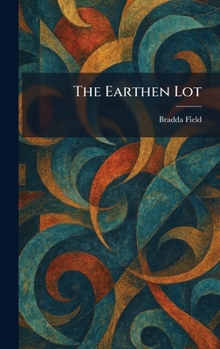
The Earthen Lot

"The Earthen Lot" is a poignant coming-of-age novel that explores the inner life of Victoria, a young girl navigating the shifting social landscapes of early 20th-century England. Raised in a household dominated by her formidable grandmother, Victoria must find her own identity amidst the expectations and constraints of her upbringing. Bradda Field's prose captures the nuances of domestic life and the slow decay of the Edwardian era with remarkable sensitivity and detail.
The narrative delves into the complexities of family relationships and the inevitable passage from childhood innocence to the disillusionment of maturity. As Victoria encounters the eccentricities of her relatives and the pressures of her social standing, the novel paints a vivid picture of a world in transition. Celebrated for its psychological depth and atmospheric setting, "The Earthen Lot" stands as a significant work of early 20th-century literature, offering a compelling look at the personal struggles and societal shifts that defined a generation.
This work has been selected by scholars as being culturally important, and is part of the knowledge base of civilization as we know it. This work was reproduced from the original artifact, and remains as true to the original work as possible. Therefore, you may see the original copyright references, library stamps (as most of these works have been housed in our most important libraries around the world), and other notations in the work.
This work is in the public domain in the United States of America, and possibly other nations. Within the United States, you may freely copy and distribute this work, as no entity (individual or corporate) has a copyright on the body of the work.
As a reproduction of a historical artifact, this work may contain missing or blurred pages, poor pictures, errant marks, etc. Scholars believe, and we concur, that this work is important enough to be preserved, reproduced, and made generally available to the public. We appreciate your support of the preservation process, and thank you for being an important part of keeping this knowledge alive and relevant.
Customer Reviews
ThriftBooks ® and the ThriftBooks ® logo are registered trademarks of Thrift Books Global, LLC
