


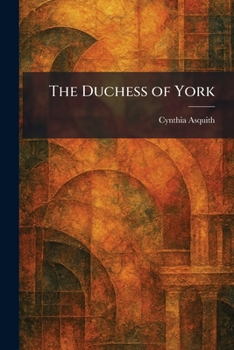
The Duchess of York

"The Duchess of York" provides an intimate and contemporary portrait of Lady Elizabeth Bowes-Lyon during her formative years as a prominent member of the British Royal Family. Written by Lady Cynthia Asquith, a contemporary observer with unique access to the social circles of the era, this work captures the public fascination with the young Duchess long before she would become Queen Elizabeth and later the Queen Mother.
The narrative explores the grace, charm, and sense of duty that defined the Duchess's public life in the late 1920s. Through descriptive prose, the book details her early life, her marriage to the Duke of York, and her emerging role within the House of Windsor. As a historical document, it offers readers a rare glimpse into the rituals and responsibilities of British royalty during the interwar period, reflecting the cultural landscape of a Britain recovering from the Great War while maintaining the traditions of the monarchy.
This biography serves as a vital record for those interested in the history of the British monarchy and the enduring legacy of one of its most beloved figures. It remains an essential read for students of royal history and enthusiasts of early 20th-century biographical literature, providing insight into the woman who would help lead the nation through the challenges of the coming decades.
This work has been selected by scholars as being culturally important, and is part of the knowledge base of civilization as we know it. This work was reproduced from the original artifact, and remains as true to the original work as possible. Therefore, you may see the original copyright references, library stamps (as most of these works have been housed in our most important libraries around the world), and other notations in the work.
This work is in the public domain in the United States of America, and possibly other nations. Within the United States, you may freely copy and distribute this work, as no entity (individual or corporate) has a copyright on the body of the work.
As a reproduction of a historical artifact, this work may contain missing or blurred pages, poor pictures, errant marks, etc. Scholars believe, and we concur, that this work is important enough to be preserved, reproduced, and made generally available to the public. We appreciate your support of the preservation process, and thank you for being an important part of keeping this knowledge alive and relevant.
Customer Reviews
ThriftBooks ® and the ThriftBooks ® logo are registered trademarks of Thrift Books Global, LLC
