


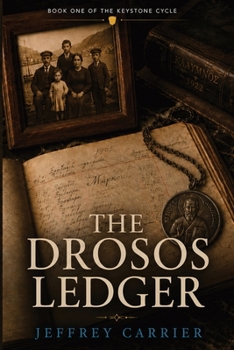
The Drosos Ledger: The Keystone Cycle, Book One

Greek school, Saint Nicholas Cathedral, her father's sponge boat. Athena Markou has performed her family's Greekness all seventeen years of her life. Then she gets to Kalymnos, and the island will not perform it back.
When Athena wins a place in the Keystone Diaspora Heritage Program, she expects Greece to confirm the version of herself she already is - fourth-generation Tarpon Springs, sponge-diver daughter, the girl who carries a Saint Nicholas medallion engraved with her grandmother's initials. The dorm in Pothia thinks otherwise. Her Greek is a hundred years out of date. The cooperative manager recognizes her family name in a way she has never been recognized at home. And the converted 1920s merchant house she has been assigned to share with four other Greek diaspora students is the house of the family who once owned the dock her great-grandfather worked.
In a back-room museum ledger in January of her second year, Athena finds the page. Manolis Markou. Her great-great-grandfather, listed under outstanding accounts. The heroic 1905 family migration she grew up celebrating was not a migration. It was a debt-clearing. And her grandmother - the keeper of every recipe, every saint's day, every Tarpon Springs ritual - has known the whole time.
The Drosos Ledger follows Athena across four years: two in the salt-damaged Pothia dorm where five Greek diaspora teenagers become a kitchen, and two back home in Tarpon Springs, watching her own city for the first time. It is a quietly devastating coming-of-age novel about inheritance, silence, and what it costs to find out the story your family told about itself was the second draft.
For readers of Pachinko, The Eight Mountains, and Saltwater. Book One of The Keystone Cycle, a five-book literary series following five Greek diaspora teenagers across two continents and four years.
Customer Reviews
ThriftBooks ® and the ThriftBooks ® logo are registered trademarks of Thrift Books Global, LLC
