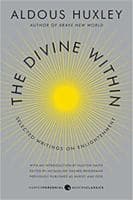
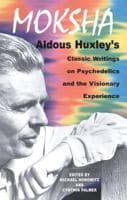
"A genuine spiritual quest. . . . Extraordinary." -- New York Times
Among the most profound and influential explorations of mind-expanding psychedelic drugs ever written, this landmark work of consciousness exploration includes two complete classic books--The Doors of Perception and Heaven and Hell--in which Aldous Huxley, author of Brave New World, reveals the mind's remote frontiers and the unmapped areas of human consciousness. This edition also features an additional essay, "Drugs That Shape Men's Minds," now included for the first time.
This foundational work of psychedelic literature details Huxley's transformational journey and includes:
Firsthand Psychedelic Experience: Follow Huxley as he swallows four-tenths of a gram of mescalin and meticulously documents the profound changes in his perception of reality, from seeing the "Inner Light" in a vase of flowers to understanding the "divine source of all existence."
Consciousness Exploration: Delve into the theory of the brain as a "reducing valve," a concept that explains how the mind filters reality and how psychedelics can temporarily open the doors of perception to a vaster, unfiltered awareness known as "Mind at Large."
Visionary Art and Perception: Discover a new way of seeing art and the world, where the folds in a pair of trousers or the legs of a chair become "living hieroglyphs" and reveal the "unfathomable mystery of pure being."
The Nature of Heaven and Hell: Go beyond a single journey to explore the crucial differences between blissful and terrifying visionary states, examining the psychological conditions that can turn a spiritual quest into an infernal experience.
Poor eyesight helped guide Aldous Leonard Huxley to a literary career. Born in 1894 in England, Huxley began his schooling in his father's botanical laboratory. He later studied at Eton and English literature at Balliol College, Oxford, from which he graduated with first class honors. Following university, Huxley taught French for a year at Eton. His jobs also included working as a farm laborer during World War I and at a chemical plant, as well as editing the magazine Oxford Poetry. Most famous for his 1959 novel Brave New World, Huxley also published short stories, poetry, travel writing, film scripts, and nearly fifty other books. Brave New World, recipient of the American Academy of Arts and Letters Award of Merit, has been adapted several times for television, radio, and film. Huxley moved with his family to Hollywood in 1938 and lived in the U.S. until his death in 1963.
"The Doors of Perception" is probably the most popular non-fiction work on the subject of psychedelic experiences; it is based on first account records of the author's decision to experiment the consequences of intake of small amounts of mescalin, in an attempt to reach enlightenment and escape world's boredom. Being who he was, the result is a very interesting narrative in which the author expands on his not only scientific but also philosophical, religious, and artistic ideas.The philosopher C.D.Broad suggested that our brains are genetically programmed to screen perceptions, selecting only those that are necessary for survival. By doing so, humans close the doors to what Huxley calls "Mind-at-Large," thereby loosing access to the world of unconsciousness and wonder. Only through the use of chemical substances can a human being free himself from his inherited limitations, experience the realms of supernaturally brilliant visionary experiences, and obtain total freedom from the ego. In this new stage of consciousness, spatial and time relationships cease to exist, whilst intensity, profundity of significance are augmented. Our everyday reliance on language petrifies perception because "however expressive, symbols can never be the things they stand for." There is a need for a less exclusively verbal system of education and "an occasional trip through some chemical Door in the Wall!"Huxley's work is highly controversial and paradoxical. How are we to develop a science of perception if our language is not equipped to express that same perception? How are we to explain the differences in reaction to mescalin intake, ranging from peaceful and mystical to schizophrenic behavior? How are we to define individuals "with open minds and sound lives" who would be normally allowed to use chemical substances (drugs) with no risk involved? Let the reader keep in mind that this book was published back in 1954 and nowadays science is till dealing with these issues.In order to give an anwer as to why individuals react differently to drug intake, Huxley worte "Heaven and Hell." According to him, for some "the ego doesn't melt like an iceberg in tropical waters, but expands to the point of suffocation;" only those who are free from negative emotions (fear, hatred, anger) have the door opened to visionary experience.Aldous Huxley raises a number of interesting issues, not be taken as "chicken-soup for drugs," but rather as intellectual exercise for further thought and consideration as to what we most commonly refer to as "reality." His opinions and explanations may sometimes be considered "naive" and not fully elaborated, but merit goes to his audacity in exploring an area which to this day remains open to further understanding.
12
★★★★★
Credible Argument for Responsible Use of Hallucinogens
By Thriftbooks.com User, March 17, 1999
In the first half of the book, DOORS OF PERCEPTION--originally a separate volume--Huxley offers a cogent and erudite argument for the use hallucinogens (specifically, mescaline) as a means for opening up the thinking mind to new ideas and perceptions, or even as a method for jumpstarting human creativity in the common man. Not only does he offer compelling historical precedents and sound medical research, but he also reveals positive details about his own personal experimentation with the drug. As is always the case with Huxley's essays, his various hypotheses are very articulately expressed and not easily dismissed.The second part of the book, HEAVEN AND HELL--also originally published separately--Huxley introduces the idea that spiritual insight and personal revelation can also be achieved through the use of hallucinogens. (By the time he had written this volume, Huxley had added LSD to his psychedelic repertoire.) While just as articulately written and researched as the first volume, the idea that religious insight can be gained through drugs may offend some readers (theists and atheists alike), and the premise seems odd and contrived or expedient (was he trying to gain support of the clergy?) coming from a generally non-theist thinker-philosopher such as Huxley. Nevertheless, it is still thought-provoking reading for both professionals and amateurs interested in the positive potential of mind-altering drugs.