


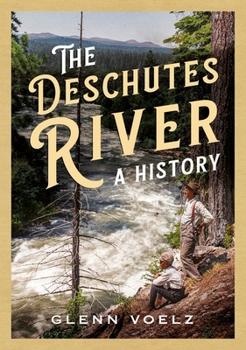
The Deschutes River: A History
No Customer Reviews

The spring-fed Deschutes River shifted from steady natural flow to a human-engineered system shaped by dams, irrigation, and industry.
The Deschutes River is one of the world's largest spring-fed rivers, renowned for its steady flow and stunning vistas. Humans lived along the Deschutes for thousands of years without altering the river or its flow. However, that balance shifted when early settlers began using its waters for power and irrigation. In the early twentieth century, railroad companies blasted their way up the lower canyon, while the timber industry turned sections of the upper river into an industrial zone. Newspapers dubbed the Deschutes a "river of gold," touting its potential to transform the region's economy.
Over time, the Deschutes gradually became a different river, engineered to meet human needs. Sections of the river sometimes ran dry to irrigate distant farms, while hydroelectric dams flooded ancient canyons and blocked historic fish migrations. By the 1960s, the Deschutes was no longer a free-flowing river but instead ran more like a machine. In recent decades, shifting views of river ecology, scenic values, and recreation have brought new perspectives on the river and renewed hope for its future. This is the story of how the modern Deschutes came to be.
The Deschutes River is one of the world's largest spring-fed rivers, renowned for its steady flow and stunning vistas. Humans lived along the Deschutes for thousands of years without altering the river or its flow. However, that balance shifted when early settlers began using its waters for power and irrigation. In the early twentieth century, railroad companies blasted their way up the lower canyon, while the timber industry turned sections of the upper river into an industrial zone. Newspapers dubbed the Deschutes a "river of gold," touting its potential to transform the region's economy.
Over time, the Deschutes gradually became a different river, engineered to meet human needs. Sections of the river sometimes ran dry to irrigate distant farms, while hydroelectric dams flooded ancient canyons and blocked historic fish migrations. By the 1960s, the Deschutes was no longer a free-flowing river but instead ran more like a machine. In recent decades, shifting views of river ecology, scenic values, and recreation have brought new perspectives on the river and renewed hope for its future. This is the story of how the modern Deschutes came to be.
Format:Paperback
Language:English
ISBN:1634996488
ISBN13:9781634996488
Release Date:November 2026
Publisher:America Through Time
Length:224 Pages
Related Subjects
NatureCustomer Reviews
0 rating
Copyright © 2026 Thriftbooks.com
Terms of Use | Privacy Policy | Do Not Sell/Share My Personal Information | Cookie Notice | Cookie Preferences | Accessibility Statement
ThriftBooks ® and the ThriftBooks ® logo are registered trademarks of Thrift Books Global, LLC
ThriftBooks ® and the ThriftBooks ® logo are registered trademarks of Thrift Books Global, LLC
