


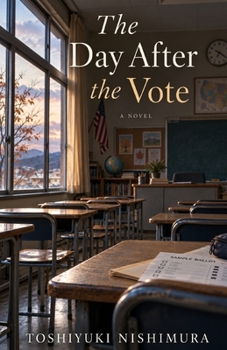
The Day After the Vote

She voted for what she believed would protect her community. The next morning, she went back to teaching its children.
Joan Mercer has spent twenty-two years teaching elementary school in the same American town. She knows her students, their families, and the small routines that hold a classroom together.
When a state ballot measure proposes restricting voting rights to citizens, Joan votes in favor. Her husband votes against it. He assumes she did too.
The measure passes.
At school, Joan continues to teach children whose families have no voice in the decision. At home, she carries on with her marriage, her son's growing independence, and the practical obligations of an ordinary life. Nothing changes all at once. Yet the consequences of the vote gradually enter conversations, relationships, and choices that cannot be settled at the ballot box.
Joan does not stop caring about her students. Nor does caring for them resolve the meaning of her vote.
The Day After the Vote is a quiet, character-driven literary novel about political choice, marriage, belonging, and the distance between what people believe and what others must live with.
It asks what happens after a democratic decision is made-when the voting is over, but everyone still has to live together.
The novel stands on its own, but it explores questions of political membership and belonging also examined in Toshiyuki Nishimura's The World Citizen Revolution and The World Citizen Society. Where those books approach the questions through history and political theory, The Day After the Vote explores them through the ordinary lives of people who do not necessarily agree.Customer Reviews
ThriftBooks ® and the ThriftBooks ® logo are registered trademarks of Thrift Books Global, LLC
