


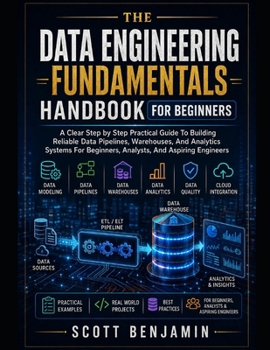
THE DATA ENGINEERING FUNDAMENTALS HANDBOOK FOR BEGINNERS: A CLEAR STEP BY STEP PRACTICAL GUIDE TO BUILDING RELIABLE DATA PIPELINES, WAREHOUSES, AND ... BEGINNERS, ANALYSTS, AND ASPIRING ENGINEERS

What if you could finally understand data engineering without getting overwhelmed by complex terminology, scattered tutorials, and advanced concepts that assume you already know the basics?
What if you could learn how data pipelines, databases, data warehouses, ETL/ELT processes, analytics systems, and modern data platforms fit together-and understand not just what they are, but why and when they are used?
What if you could build a solid foundation in data engineering step by step, develop practical technical skills, and confidently move from beginner concepts to real-world data workflows?
THE DATA ENGINEERING FUNDAMENTALS HANDBOOK FOR BEGINNERS is a practical, beginner-friendly guide designed to make the world of data engineering clear, structured, and approachable. Instead of drowning you in unnecessary theory, this book focuses on the fundamental concepts, tools, workflows, and problem-solving principles you need to understand how modern data systems work.
Inside, you'll explore the essential building blocks of data engineering, including data collection, databases, SQL, data modeling, ETL and ELT, data pipelines, data warehouses, data lakes, data quality, orchestration, APIs, cloud-based data systems, and analytics infrastructure. You'll also learn how these components connect to form reliable systems that move, transform, store, and prepare data for analysis and decision-making.
Whether you're a complete beginner, student, aspiring data engineer, analyst, developer, IT professional, or technical learner looking to transition into data engineering, this handbook provides a clear path for developing your knowledge from the ground up.
You'll learn how to:
Understand the role of a data engineer and how data engineering differs from data analysis and data science
Work with databases and understand how structured data is stored and managed
Use SQL fundamentals to retrieve, filter, transform, and analyze data
Understand data modeling and how to design effective data structures
Explore ETL and ELT workflows and understand when each approach is useful
Understand how reliable data pipelines are designed and maintained
Learn the purpose of data warehouses, data lakes, and modern data platforms
Work with APIs and other common methods of collecting and integrating data
Understand batch processing and the fundamentals of streaming data
Explore workflow orchestration and why scheduling and monitoring matter
Learn essential principles of data quality, validation, reliability, and governance
Understand how cloud technologies are transforming modern data engineering
Recognize common data engineering challenges and practical ways to approach them
Develop the foundation needed to continue learning more advanced data engineering technologies
The goal is not simply to memorize tools or technologies. It is to help you think like a data engineer-understanding how data moves through a system, where problems can occur, how different components work together, and how reliable data infrastructure supports analytics and business decisions.
With clear explanations, practical concepts, structured learning, and a focus on real-world workflows, THE DATA ENGINEERING FUNDAMENTALS HANDBOOK FOR BEGINNERS gives you a strong starting point for entering the field and building the skills needed to work with modern data systems.
Start with the fundamentals. Build your understanding step by step. Learn how modern data systems work-and begin your journey toward becoming a confident data engineering professional.
Customer Reviews
ThriftBooks ® and the ThriftBooks ® logo are registered trademarks of Thrift Books Global, LLC
