


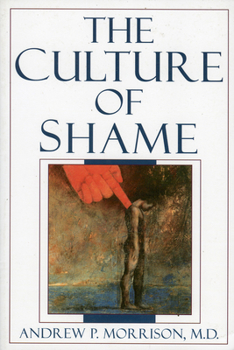
The Culture of Shame


Select Format
Select Condition 
Book Overview
The author exposes the many masks of shame and examines the way it paralyzes us, individually and collectively. He draws on powerful case stories to illustrate the language and impact of shame and how it can be overcome.
Format:Paperback
Language:English
ISBN:076570174X
ISBN13:9780765701749
Release Date:May 1998
Publisher:Jason Aronson
Length:240 Pages
Weight:0.89 lbs.
Dimensions:0.7" x 6.1" x 9.0"
Customer Reviews
3 ratings
Sincere and well-developed
Published by Thriftbooks.com User , 16 years ago
I thought that Dr. Morrison made a number of great points on the subject of shame; there were two especially good points, one specific and one general. First, that some people (and he acknowledges that it maybe due to genetics, as he saw improvement with Prozac, which increased serotonin) are shame sensitive and can lead to narcissistic vulnerability and perhaps manic behavior. Interestingly, about one fifth of the population inherits a shorter version of the serotonin transporter gene (known as the 5-HTTLPR on chromosome 17), from both parents. The second point is a general point and that is how incredibly important "good enough" parenting and role modeling is. It seems there are a number of ways shame can develop; imprinted by a shamed, unavailable parent (even in infancy) or created by parenting that is too idealistic, too demanding, too moralistic or, more obviously, by overt bullying, abusive, and sadistic parenting. Additionally, Morrison makes the excellent point that reducing or eliminating shame is not the same as shamelessness in contrast to social theorist Christopher Lasch's writing in favor of shame and against the social emphasis on self-esteem. He writes (page 196): "This is a view with which I strongly disagree, for we have seen the many ways in which shame cripples our sense of personal worth and, through its impetus to hide and conceal, the capacity for actions aimed at reversing convictions of incompetence so central to shame." I also liked his following point about the shame shows... those disclosures on shows from Oprah Winfrey to Jerry Springer... in which the focus is often upon revealing shame. He states: "The immense popularity of these shows, and hte broad demand from viewers to experience and participate in tales of degradation and self-abasement, document the prevalence of the shame culture in contemporary American society." There are many other great insights and points throughout the book. The style of writing flows easily and overall I found it to be an excellent education on the very complex emotion of shame and its' many ramifications.
Great book..
Published by Thriftbooks.com User , 17 years ago
This is another terrific contribution to literature regarding shame. One minor criticism I have is that Morrison is partly incorrect in his analysis of narcissism which he only really give a couple pages to. Narcissism is shame based, which he of course understands. But he states that the grandiose aspect of narcissism comes from when a person is being embarrassed/shamed, in there mind there being given extra attention thus they believe there "special" or "unique." This is of course is incorrect. A person with NPD that has grandiosity, unrealistic fantasies, sense of entitlement and exaggerates there own importance do so in defense of there deeply insecure, flawed sense of self. There false or ideal self make up for this by exhibiting the traits and behaviors the person believe they should have. Aside from that, the book is a fantastic addition to any one's library and I highly recommended it.
Intro to understanding shame
Published by Thriftbooks.com User , 25 years ago
A fine introduction to understanding an emotion that is not widely understood. Dr. Morrison shows how shame manifests itself in ordinary conversation, as well as in psychotherapy. A must read for anyone who wants to understand themselves and others.
Copyright © 2026 Thriftbooks.com Terms of Use
| Privacy Policy | Do Not
Sell/Share My Personal Information | Cookie Policy | Cookie Preferences | Accessibility Statement
ThriftBooks® and the ThriftBooks® logo are registered trademarks of Thrift Books Global, LLC
ThriftBooks® and the ThriftBooks® logo are registered trademarks of Thrift Books Global, LLC
