


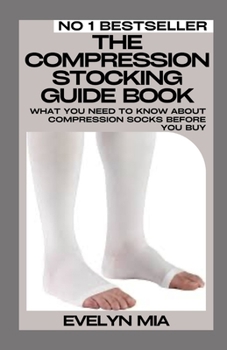
The Compression Stocking Guide Book: What You Need To Know About Compression Socks Before You Buy
No Customer Reviews

Compression stockings are specially designed to apply pressure to your lower legs, helping to maintain blood flow and reduce discomfort and swelling. They may be prescribed by your GP if you have a condition that causes poor blood flow in your legs, such as: varicose veins (swollen and enlarged veins)
You can wear your compression socks all day by putting them on when getting dressed in the morning, and take them off before bed (unless your doctor advises otherwise).
Medical compression stockings that are worn and washed daily maintain their effect for about six months. Afterwards, the compression effect of the material slowly falls. Therefore, if medically necessary, the patient is generally eligible for a new treatment after half a year.
Before self-prescribing compression socks, Dr. Ichinose says they are not recommended for some patients. "If you have peripheral vascular disease affecting your lower extremities, you should not wear compression socks," he says. "The pressure provided by compression socks may make ischemic disease worse.
Whenever you are choosing between compression sock sizes, essentially just measure the circumference of your calf and the circumference of your ankle. But what if your measurement falls in between sizes. What should you do? Try smaller sizes that are closer to your measurements; don't opt-in for sizes higher than you.
You can wear your compression socks all day by putting them on when getting dressed in the morning, and take them off before bed (unless your doctor advises otherwise).
Medical compression stockings that are worn and washed daily maintain their effect for about six months. Afterwards, the compression effect of the material slowly falls. Therefore, if medically necessary, the patient is generally eligible for a new treatment after half a year.
Before self-prescribing compression socks, Dr. Ichinose says they are not recommended for some patients. "If you have peripheral vascular disease affecting your lower extremities, you should not wear compression socks," he says. "The pressure provided by compression socks may make ischemic disease worse.
Whenever you are choosing between compression sock sizes, essentially just measure the circumference of your calf and the circumference of your ankle. But what if your measurement falls in between sizes. What should you do? Try smaller sizes that are closer to your measurements; don't opt-in for sizes higher than you.
Format:Paperback
Language:English
ISBN:B0BBYBDTZD
ISBN13:9798848378481
Release Date:January 1
Publisher:Independently Published
Length:118 Pages
Weight:0.32 lbs.
Dimensions:0.3" x 5.5" x 8.5"
Customer Reviews
0 rating
Copyright © 2026 Thriftbooks.com Terms of Use
| Privacy Policy | Do Not
Sell/Share My Personal Information | Cookie Policy | Cookie Preferences | Accessibility Statement
ThriftBooks® and the ThriftBooks® logo are registered trademarks of Thrift Books Global, LLC
ThriftBooks® and the ThriftBooks® logo are registered trademarks of Thrift Books Global, LLC
