


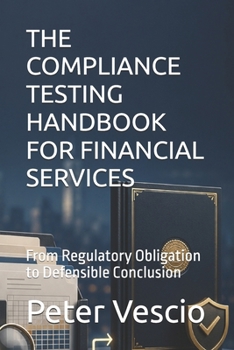
The Compliance Testing Handbook for Financial Services: From Regulatory Obligation to Defensible Conclusion

What does it take to move from a regulatory obligation to a conclusion that can withstand scrutiny?
The Compliance Testing Handbook for Financial Services provides a practical, end-to-end methodology for designing, governing, executing, reviewing, and reporting independent compliance tests.
Written for banks, fintechs, payments companies, lenders, credit unions, and other regulated financial-services organizations, this handbook explains how to build credible testing from the ground up. It goes beyond policies, checklists, and control inventories to address the actual work required to determine whether compliance obligations are being met.
Readers will learn how to:
Translate regulatory obligations into testable requirementsDefine applicability, scope, objectives, and testing criteriaReview data methods and validate testing populationsSelect appropriate sampling and stratification approachesEvaluate evidence for relevance, reliability, and sufficiencyDocument attribute-level results and exceptionsDevelop supportable findings and root-cause conclusionsManage stakeholder questions, rebuttals, and approvalsValidate corrective action and remediationProduce reporting that traces directly to the underlying workConnect testing results to the broader compliance management systemUse technology and AI to improve execution without removing human accountabilityThe book also includes practical templates, checklists, decision guides, workpapers, reporting tools, a compliance testing maturity assessment, and a complete end-to-end worked example.
Based on 25 years of experience in independent compliance testing within a large-bank environment, Peter Vescio presents compliance testing as a professional operating discipline in its own right.
The central principle is straightforward:
A compliance testing conclusion should say no more and no less than the governed method and evidence support.
This handbook is designed for compliance testers, testing managers, chief compliance officers, internal auditors, consultants, bank-partnership teams, fintech leaders, control owners, and anyone responsible for producing or relying on defensible compliance assurance.
Customer Reviews
ThriftBooks ® and the ThriftBooks ® logo are registered trademarks of Thrift Books Global, LLC
