


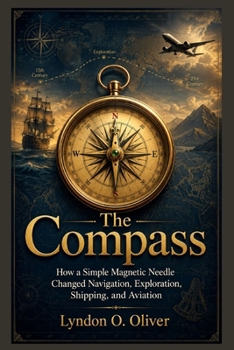
The Compass: How a Simple Magnetic Needle Changed Navigation, Exploration, Shipping, and Aviation

What if one of the smallest tools in history changed the way humanity understood the world?
The Compass: How a Simple Magnetic Needle Changed Navigation, Exploration, Shipping, and Aviation tells the remarkable story of the invention that gave people a reliable sense of direction and helped open the oceans, connect distant lands, and shape modern travel.
This engaging book explores the history of navigation, from ancient navigation methods based on stars, coastlines, winds, and memory to the invention of the magnetic needle. Readers will discover how the history of the magnetic compass began with early observations of lodestone, how knowledge of magnetism developed in China, and why the compass became one of the most important ancient Chinese inventions.
The book explains the science of magnetism in clear, simple language. It shows how lodestone and magnetism led to the first directional devices and how sailors learned to use the compass when clouds, darkness, or fog hid the Sun and stars. It also explains magnetic north in a way that makes concepts such as declination, variation, deviation, and Earth's changing magnetic field easy to understand.
Readers will follow the growth of sailing navigation history and the rise of long-distance sea travel. The compass became central to maritime exploration history, supported the expansion of trade, and changed the history of sea travel. It helped sailors maintain a steady course, improved dead reckoning navigation, and worked alongside the stars during the development of celestial navigation history.
This is also a story about ship navigation instruments and the steady progress of design. From floating needles and early compass cards to gimballed compasses, binnacles, liquid compasses, and gyrocompasses, the book traces the development of maritime technology history. These tools helped make ships safer and more dependable across long and dangerous routes.
The compass also shaped the history of world exploration and the growth of geographic discovery. It supported voyages across oceans, helped improve charts, and influenced the history of mapmaking. At the same time, the book presents a balanced view of how navigation supported trade, cultural contact, colonization, warfare, and global expansion.
The story continues into the sky through aircraft navigation history and the rise of the modern cockpit. Readers will learn how magnetic compasses were adapted for aircraft, why they behave differently during turns and acceleration, and how they contributed to aviation instrument history.
The compass remains useful even today. This book explores navigation before GPS, the rise of electronic sensors, smartphone magnetometers, and the continuing need for backup navigation. It also introduces practical ideas connected with compass and map reading, showing why traditional skills still matter when batteries fail or satellite signals are unavailable.
Written for readers who enjoy nautical history books, science, invention, travel, and discovery, this book offers a clear account of the invention of navigation tools and the people who improved them across many centuries. It also examines the history of seafaring inventions and the wider role of inventions that changed travel.
Whether you are interested in ships, aircraft, exploration, maps, magnetism, or the human desire to find direction, The Compass offers an informative and enjoyable journey through one of history's most useful inventions.
Discover how a simple needle became one of the greatest tools of movement, discovery, and connection ever created.
Customer Reviews
ThriftBooks ® and the ThriftBooks ® logo are registered trademarks of Thrift Books Global, LLC
