


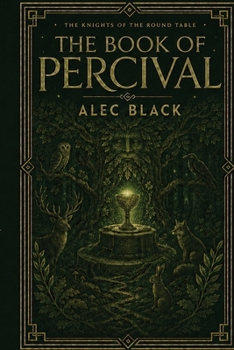
The Book of Percival

A boy sees knights riding beneath the trees and mistakes them for angels. From that hour, the road claims him.
Raised beyond the courts of men, and taught first by the creatures of the wood and later by the Green Man, Percival comes into the world bearing neither ambition nor cunning. He carries only his innocence, his scarlet armour and a question whose meaning he has not yet learned.
The land is failing. Rivers run thin, old roads are forgotten, and the Fisher King lies wounded in a kingdom that can no longer heal itself. As the fellowship of Arthur begins to fracture, Percival must leave the green quiet of his childhood and pass through Camelot, war, grief and the uncertain borders of Otherworld.
There he discovers that goodness is not preserved by remaining untouched. It must endure knowledge, loss and the temptation to despair. Every mercy demands a price. Every threshold asks what manner of man will cross it.
At the end of the road stands Corbenic, where the Holy Grail cannot be conquered, possessed or commanded. It may be revealed only to one who has learned that the truest question is asked not for oneself, but for another.
The Book of Percival is a literary reimagining of the Grail legend: an Arthurian romance of innocence tested, mercy made costly and the long search for that which may restore a wounded king and a broken land.
Customer Reviews
ThriftBooks ® and the ThriftBooks ® logo are registered trademarks of Thrift Books Global, LLC
