


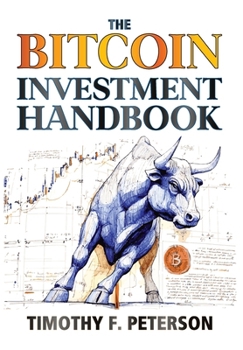
The Bitcoin Investment Handbook

The Bitcoin Investment Handbook is a comprehensive professional reference for evaluating Bitcoin as a financial asset. Written for investors, fiduciaries, analysts, and serious students of digital assets, it brings together monetary history, computer science, cryptography, network economics, valuation theory, portfolio construction, and risk management in a single disciplined framework. The book explains what Bitcoin is, why it exists, how it works, and how investors can judge its value without relying on headlines, promotional claims, or price speculation. It covers digital signatures, proof of work, mining, forks, custody, exchange risk, monetary properties, adoption dynamics, Metcalfe's Law, network effects, valuation models, volatility, drawdowns, ETFs, leverage, operational risk, and investment policy. Unlike introductory cryptocurrency books, this volume treats Bitcoin with the same analytical standards used for equities, fixed income, commodities, currencies, and alternative investments. It examines Bitcoin's fixed supply, settlement structure, security model, network value, macroeconomic role, and portfolio applications, while also addressing common criticisms involving energy use, crime, volatility, intrinsic value, scalability, and replacement risk. Designed as a desk reference, The Bitcoin Investment Handbook gives readers the tools to decide whether Bitcoin belongs in a portfolio, how much exposure may be appropriate, what risks must be controlled, and how to evaluate Bitcoin across market cycles. It is intended for readers who want a rigorous, evidence-based understanding of Bitcoin as money, technology, network, and investment asset.
Customer Reviews
ThriftBooks ® and the ThriftBooks ® logo are registered trademarks of Thrift Books Global, LLC
