


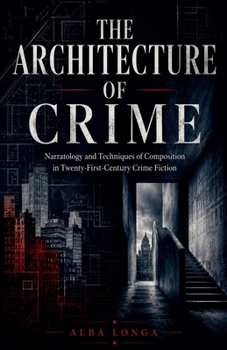
The Architecture of Crime

Crime fiction is more than a sequence of crimes, clues, and solutions. It is an architecture of knowledge: a system that controls what characters and readers know, when they know it, and how that knowledge changes everything that came before.
The Architecture of Crime presents a comprehensive narratology of twenty-first-century crime fiction, examining focalization, narrative voice, clues, suspense, unreliable narration, chronology, plot twists, traumatic memory, seriality, social violence, and the ethics of point of view. Drawing on an international corpus that ranges from noir and police procedurals to psychological thrillers, historical crime fiction, domestic noir, eco-noir, and hybrid forms, it connects major narrative theories with close readings of contemporary writers.
Designed for readers, scholars, critics, teachers, and writers, the volume also includes a reasoned glossary, a chronology of the genre since 2000, an international atlas, a narrative-analysis worksheet, and a detailed composition template for planning a crime novel. The result is both a rigorous critical study and a practical guide to understanding how crime fiction creates uncertainty, revelation, and moral consequence.
Customer Reviews
ThriftBooks ® and the ThriftBooks ® logo are registered trademarks of Thrift Books Global, LLC
