


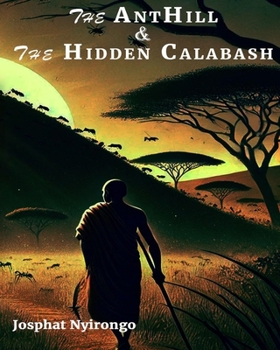
The Anthill and the Hidden Calabash

The Anthill and the Hidden Calabash by Josphat Nyirongo is set in Kapela, a fictional village in eastern Zambia. The novel opens with Kapela's founding by Chuma and follows the lineage of its people through the events that shaped them.
Its central figure is Makezana, a man of wisdom and strength whose birth was foretold by Kachinkhicho, the village seer. His life becomes bound to Kapela's survival. When a stranger arrives with new ideas, the village's beliefs are questioned, and Makezana is caught between spiritual duty and material ambition, between the needs of the community and those of the individual. Sacred places such as the mtondo tree carry the people's bond with their land and their ancestors.
The final part of the novel turns on the death of Chimwemwe, Makezana's wife. Her illness cannot be explained, even by her son Kumbukani, a medical doctor. Unable to find an answer in his training, Kumbukani turns to traditional healers.
The family gathers in Lundazi for the burial. Grief reopens old wounds, above all between Kumbukani and his father, whom he blames for his mother's suffering. During the rites that follow, the family's buried conflicts come into the open. Makezana loses a son and a daughter at the same time. Kumbukani, having also lost his pregnant wife and his siblings, falls into mental collapse and disappears, returning only during the cleansing ceremony.
Grounded in Tumbuka folklore, belief and custom, the novel examines identity, belonging and the weight of inheritance when tradition and modern life meet within a single family.
Customer Reviews
ThriftBooks ® and the ThriftBooks ® logo are registered trademarks of Thrift Books Global, LLC
