


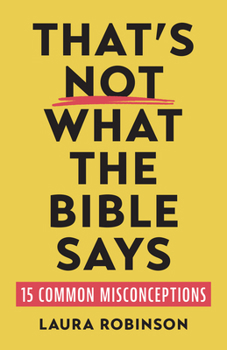
That's Not What the Bible Says: 15 Common Misconceptions

How to read the Bible with discernment in an age of misinformation
We can search the internet for "what the Bible says" about a topic and get instant answers. Bible-based discussions proliferate across video channels, podcasts, and social media. But quantity isn't quality, and immediacy isn't a guarantee of genuine insight. The sound bites that circulate online tend to skip over one of the most important questions of all: How does anyone actually know what the Bible says?
In this lively book, New Testament scholar and teacher Laura Robinson identifies prevalent misconceptions about the Bible--especially ideas that are popular online--that deserve closer examination. Her aim isn't to give readers the "right" answer but to show them how good answers are arrived at--in other words, to reveal the processes that thoughtful readers of Scripture use to draw conclusions about what they're reading.
Chapter by chapter, Robinson teaches readers to think like a historian and a theologian: to weigh evidence, evaluate sources, and see why the most appropriate response to a major question is usually more complicated--and far more fascinating--than a viral hot take. The Bible, after all, is a collection of texts written across centuries and genres, and to read it well we need time-tested interpretive tools.
Readers of That's Not What the Bible Says are likely to come away with new questions. That's the point; this isn't a book about what to think, but how. Both helpful and hopeful, this book is a valuable resource for people who engage regularly with online content about the Bible, people who are curious about Scripture, and lifelong learners.
Customer Reviews
ThriftBooks ® and the ThriftBooks ® logo are registered trademarks of Thrift Books Global, LLC
