


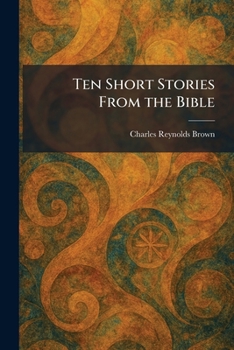
Ten Short Stories From the Bible

Select Format
Select Condition 
Book Overview
"Ten Short Stories From the Bible" is a thoughtful exploration of some of the most profound narratives found within the scriptures. Written by Charles Reynolds Brown, this collection reinterprets familiar biblical accounts, transforming them into accessible and engaging short stories that highlight their timeless moral and spiritual lessons. By focusing on the human elements of these ancient texts, the author brings the characters and their struggles to life for a contemporary audience.
The work serves as both a literary and a devotional tool, bridging the gap between historical scripture and modern understanding. Each story is selected for its narrative power and its ability to convey deep truths about the human condition and the divine. From the triumphs of faith to the consequences of moral failure, the collection covers a diverse range of themes found throughout the biblical canon. "Ten Short Stories From the Bible" is an excellent resource for those looking to deepen their engagement with biblical literature through a narrative lens, making it suitable for personal study, group discussion, or educational settings. Brown's clear prose and insightful perspective ensure that these classic stories remain as relevant today as when they were first penned.
This work has been selected by scholars as being culturally important, and is part of the knowledge base of civilization as we know it. This work was reproduced from the original artifact, and remains as true to the original work as possible. Therefore, you may see the original copyright references, library stamps (as most of these works have been housed in our most important libraries around the world), and other notations in the work.
This work is in the public domain in the United States of America, and possibly other nations. Within the United States, you may freely copy and distribute this work, as no entity (individual or corporate) has a copyright on the body of the work.
As a reproduction of a historical artifact, this work may contain missing or blurred pages, poor pictures, errant marks, etc. Scholars believe, and we concur, that this work is important enough to be preserved, reproduced, and made generally available to the public. We appreciate your support of the preservation process, and thank you for being an important part of keeping this knowledge alive and relevant.
Customer Reviews
ThriftBooks ® and the ThriftBooks ® logo are registered trademarks of Thrift Books Global, LLC
