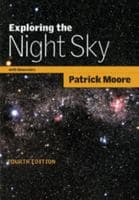
Is this the right book for me? Patrick Moore's Astronomy will ensure you recognize what you are seeing in the night sky. You will investigate the sun, moon, planets comets and stars and learn how to observe them. This comprehensive guide, complete with star charts, will map out the skies and allow you to impress your friends with your knowledge of the sky at night. Patrick Moore's Astronomy includes: Chapter 1: Introducing Astronomy Chapter 2: The spinning sky Chapter 3: Sky-watchers Chapter 4: The astronomer's telescope Chapter 5: Into space Chapter 6: The Sun Chapter 7: The Moon Chapter 8: The Sun's family Chapter 9: The inner planets Chapter 10: The outer planets Chapter 11: Minor members of the Solar System Chapter 12: The stars Chapter 13: Pattern of stars Chapter 14: Double and variable stars Chapter 15: The life and times of a star Chapter 16: The Star-clusters and nebulae Chapter 17: The depths of the universe Chapter 18: Into the future - life beyond the Earth Learn effortlessly with a new easy-to-read page design and interactive features: Not got much time? One, five and ten-minute introductions to key principles to get you started. Author insights Lots of instant help with common problems and quick tips for success, based on the author's many years of experience. Test yourself Tests in the book and online to keep track of your progress. Extend your knowledge Extra online articles to give you a richer understanding of astronomy. Five things to remember Quick refreshers to help you remember the key facts. Try this Innovative exercises illustrate what you've learnt and how to use it. This description may be from another edition of this product.
If you're starting off with astronomy (learning the basics) this is a great guide. I first discovered this book at my local library, and fell in love with its detailed information about our solar system and the universe. This brief overview contains constellation charts, tips on buying a good telescope, as well as concise, easy-to-understand information about the sun and her satellite planets, as well as Kuiper Belt dwarf planets, the Oort Cloud and other features of the universe. He also includes a little theory/laws for beginners (including Bode's Law and Kepler's Three Laws of Motion). Historical information about astronomers are also included. Unfortunately, although this book is the perfect brief guide for beginniners, it does not contain a lot of color photographs. People looking to planetary "eye candy" should turn to a book like "Universe," for color photographs. There are also some persnickety remarks (by this British astronomer) about the American space program. (But all things aside, this still is a great manual.)
0
★★★★☆
A Good Beginning Book on Astronomy
By Thriftbooks.com User, April 7, 1998
Patrick Moore outlines basic principles of Astronomy in this edition of the 'Teach Yourself' series. Moore, an English astronomer effectively teaches the beginner how to look at the stars. While astronomy is often associated with complex mathematics, Moore almost completely avoids the mathematical aspects of astronomy and simply teaches the reader how to look at the stars, identify constellations; buy, make and use a telescope. A great book for the beginner, Moore's bias towards accomplishments of English Astronomers and a hint of animosity towards American accomplishments seems to indicate that his target reading audience is of British nationality and does take a little something away from this otherwise great book.