


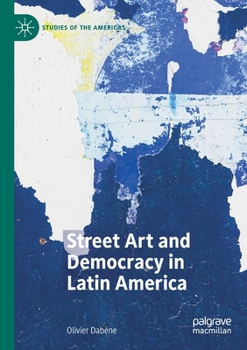
Street Art and Democracy in Latin America
No Customer Reviews

Select Format
Select Condition 
Book Overview
This book explores street art's contributions to democracy in Latin America through a comparative study of five cities: Bogota (Colombia), S?o Paulo (Brazil), Valparaiso (Chile), Oaxaca (Mexico) and Havana (Cuba). The author argues that when artists invade public space for the sake of disseminating rage, claims or statements, they behave as urban citizens who try to raise public awareness, nurture public debates and hold authorities accountable. Street art also reveals how public space is governed. When local authorities try to contain, regulate or repress public space invasions, they can achieve their goals democratically if they dialogue with the artists and try to reach a consensus inspired by a conception of the city as a commons. Under specific conditions, the book argues, street level democracy and collaborative governance can overlap, prompting a democratization of democracy.
Format:Paperback
Language:English
ISBN:3030269159
ISBN13:9783030269159
Release Date:October 2020
Publisher:Palgrave MacMillan
Length:261 Pages
Weight:0.74 lbs.
Dimensions:0.6" x 5.8" x 8.3"
Customer Reviews
0 rating
Copyright © 2026 Thriftbooks.com
Terms of Use | Privacy Policy | Do Not Sell/Share My Personal Information | Cookie Policy | Cookie Preferences | Accessibility Statement
ThriftBooks ® and the ThriftBooks ® logo are registered trademarks of Thrift Books Global, LLC
ThriftBooks ® and the ThriftBooks ® logo are registered trademarks of Thrift Books Global, LLC
