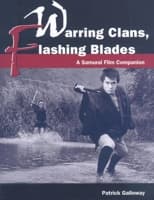
Finally, a book about the ever-popular genre of samurai film. Stray Dogs & Lone Wolves provides essential background on the samurai warrior in Japanese culture to help explain what makes these tales of loyalty, revenge and explosive swordsmanship so watchable. It covers top directors and stars and has over 50 original reviews of a wide variety of films, from classics like Samurai Trilogy and Yojimbo to influential films like Lady Snowblood , plus newly released hits like Takeshi Kitano's Zatoichi . With American directors like Quentin Tarentino increasingly influenced by Japanese films, this book is as much a guide to style as it is a solid film reference. "Galloway's thoughtful and personal touches make this book much more than just a vital reference for samurai film fans." -- The Asian Reporter "Galloway's contextualization of the genre is masterly, one of the clearest and most succinct explanations I have read on teh whole historical samurai phenomenon." -- The Daily Yomiuri "Without a doubt, Galloway knows his stuff." -- Yellow Menace From the publisher: Check out Patrick Galloway's latest book, Asian Shock: Horror and Dark Cinema from Japan, Korea, Hong Kong, & Thailand This description may be from another edition of this product.
Patrick Galloway is no film scholar, and "Stray Dogs and Lone Wolves: The Samurai Film Handbook" is no didactic, insightful critique of a unique and subtle genre. Instead, he is an unabashed fan who has written a gushing fan book full of excitement and energy, as befits the nature of the subject. This is not to put any doubt on his knowledge. Super-fan that he is, one would be hard pressed to find a more knowledgeable expert on the Samurai genre. From the most ludicrous splatterfest to the most powerful and moving drama, Galloway treats each film with respect and notes the quality of its merits on its own terms. Taking this films decade by decade, Galloway highlights the best that each period has to offer. He kicks things off right with "Roshomon" and "Seven Samurai" in the 1950's, moves through the Golden Age of the 60's with such films as "Yojimbo," "The Tale of Zatoichi," "Hara Kiri" and "Samurai Rebellion," into the 70's with "Lone Wolf and Cub: Baby Cart at the River Styx" and the "Kill Bill" inspiration "Lady Snowblood: Blizzard from the Netherworld," the 80's and beyond with "Kagemusha," "Roningai" Kitano Takeshi's "Zatoichi" and the magnificent "Twilight Samurai." He plucks the absolute best from each era, and leaves you hungry to watch every magnificent offering. Each review is packed with information on story, actors and historical setting. Ever a fan instead of a scholar, Galloway refuses to give away endings or crucial plot points, so that the films can still be fully enjoyed by eager viewers. The availability of each film is also rated, and Galloway specifically tries to review accessible films, rather than long out-of-print obscurities. Along with his great reviews, he has side galleries such as the "Character Actor Hall of Fame," with bios of all those guys you see hanging around the various Samurai flicks, but never quite put a name too, and tidbits from "Takuan the Know-It-All Priest," which offers insight into Japanese Samurai culture, dress and relationships. He also includes four prefacing essays, "The World of the Samurai," "The Samurai Film Genre," "The Artists," and "Seeing the Films" which help set the stage for the film reviews to follow. While always a fan of Samurai flicks, "Stray Dogs and Lone Wolves" has set me on the path to becoming a full-fledged fanatic. It has become my checklist to take shopping for DVDs or to the local rental shop, and so far it has never let me down. The more I see, the more I want to see, and I am constantly referencing back to this book, appreciating it even more as I see the films.
0
★★★★★
popular introduction to these popular Japanese films
By Thriftbooks.com User, August 29, 2005
Dissatisfied with the academic reference books on this popular Japanese film genre of samurai films, the longtime student of Asian and Japanese culture Galloway wrote this jaunty, learned reference providing "historical background, cultural insights, production anecdotes, actor and director bios, and detailed plot synopses" for more than 50 of the films from the 1960s into the '90s. Besides the classics "Seven Samurai" and "Rashomon," others of the numerous films included are "Three Outlaw Samurai," "Lone Wolf and Cub: Sword of Vengeance," "Heaven and Earth," and "Band of Assassins," as well as "Samurai Reincarnation" and "The Razor: Sword of Justice" and others in the series these two are a part of. Galloway's outstanding guide treats the films as part of the global popular culture rather than "foreign" films calling for explanation in terms of some film theory or film critic's abstruse, involved ideas.
0
★★★★★
Not just a guidebook -- a glimpse into a whole new world!
By Thriftbooks.com User, August 2, 2005
When I picked up this book I expected to learn just a little more about the samurai films I had already seen (not very many) but instead I found myself entering a whole new world of action heros, drama, and spectacle, as well as the Japanese version of the Hollywood studio system, with its moguls, its stars, its adoring fans, and its own mythology. Samurai films are like American cowboy movies in many ways, with their endless retelling of tales from a certain historical period in which the modern Japanese identity was forged. They're rollicking tales of adventure and intrigue, with plenty of outrageous swordplay (instead of gunplay, as in Westerns). I've read the book from cover to cover for the sheer entertainment value. I know I'll see more samurai films (and now I know which ones, and what to watch for), but even if I never intended to this book is really worth it for the tales it tells, and the lively glimpse into the world of Japanese film it offers an outsider. It's well-written, never dull, but never superficial. It's a great balance and I hope to see more from this author.
0
★★★★★
Great Film Reference and Guide
By Thriftbooks.com User, July 20, 2005
The first thing that one notices when opening this book is that the author is really very passionate about these films. Samurai Films are an art form and here, they are treated as such. It is apparent that a main goal of this book was get more people interested in samurai films and to turn them on to the very best of the genre. Plenty of background of the samurai film genre is given to the reader including a description of samurai and a description of the time period in which samurai exist. You also learn about the major studios in Japan that created samurai films and well as bios of the great directors and actors that contributed to the genre. The film write ups themselves are grouped into the major decades in which they were made and are sprinkled with a bit of humor. The author even lets the reader know how difficult it is to find every individual film and what company (if any) has released it on DVD or home video. The book is also filled with sid-sections that expand upon the reviews and provide additional and interesting information such as the "Character Actor Hall of Fame" sections - which I loved seeing. All in all, it is a great book for the price and whether you have a collection of hundreds of samurai films are have only seen a few on television, I would recommend that you get this book.