


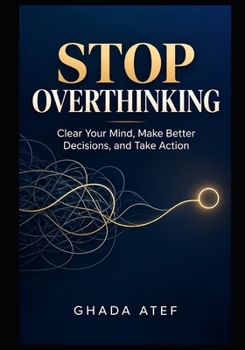
Stop Overthinking: Clear Your Mind, Make Better Decisions, and Take Action

Thinking carefully can help you make better decisions. But what happens when the same question keeps returning, even though another round of thinking produces no new information, no new options, and no clearer direction?
Stop Overthinking offers a practical way to recognise when thinking is helping and when it has stopped producing useful progress. Rather than promising to eliminate unwanted thoughts or give you certainty, this book helps you work more deliberately with the questions that remain open.
You will learn how to distinguish productive deliberation from repetitive thinking, identify what kind of question you are facing, evaluate whether further thought is producing anything useful, and decide how much attention a decision deserves. You will also explore how to work with uncertainty, handle close calls, review difficult conversations without endlessly replaying them, and choose a practical next step when a question cannot be fully resolved.
Through structured exercises, realistic examples, and practical reflection tools, you will develop a clearer way to examine your questions and decide whether to act, gather information, test an option, defer a decision, or deliberately leave something unresolved.
This book recognises that not every question has a perfect answer and not every difficult thought can be resolved through self-help. It distinguishes ordinary repetitive thinking from concerns that may require professional support, and it does not present its exercises as validated psychological tests or treatments.
Part of The Designed Progress Series, Stop Overthinking offers a measured, practical approach to decision-making, uncertainty, and taking action without waiting for complete certainty.
Customer Reviews
ThriftBooks ® and the ThriftBooks ® logo are registered trademarks of Thrift Books Global, LLC
